It's Not Just Sugar: The Real Reason We Reach for British Sweets When We Want to Say Something
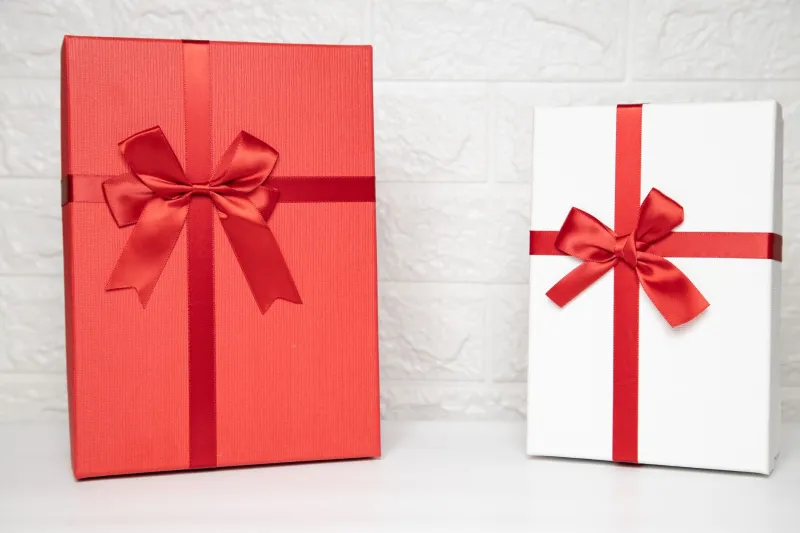
The Gift That Doesn't Try Too Hard
There's a particular kind of gift that lands perfectly every time. Not the expensive one, not the showy one — the one that shows you were paying attention. You remembered that your dad used to buy a quarter of pear drops every Friday. You know your best friend has been obsessed with clotted cream fudge since a holiday in Cornwall six years ago. You spotted, in passing, that your colleague mentioned missing the sweets her nan used to keep in a dish on the coffee table.
That kind of gift — specific, considered, rooted in a shared memory or a known preference — carries a weight that a generic box of chocolates simply cannot match. And British confectionery, perhaps more than any other food category, is built for exactly this kind of gifting. The question is why.
Memory Is the Secret Ingredient
Dr. Clara Henshall, a consumer psychologist based in Bristol who has studied the emotional dimensions of food gifting, puts it plainly. "Sweets are one of the earliest foods we form strong memories around," she explains. "The flavours, the textures, the context of eating them — a school tuck shop, a grandparent's house, a seaside trip — all of that gets encoded very early. When you give someone a sweet that connects to that memory, you're not just giving them a food. You're giving them access to a feeling."
This is why the heritage British sweet — the kind you'd find in a proper confectionery shop, weighed out from a jar — carries so much more emotional charge than a mass-produced bar picked up at the checkout. The mass-produced bar is fine. It tastes good. But it doesn't belong to anyone in particular. A quarter of rhubarb and custards, on the other hand, might belong to someone very specifically indeed.
Gift consultant Priya Okafor, who advises clients on corporate and personal gifting from her practice in Manchester, has seen this dynamic play out hundreds of times. "People consistently underestimate how much a thoughtful food gift communicates," she says. "When you give someone a sweet that you know they loved as a child, you're telling them you listen. That's a surprisingly rare thing to communicate."
What the Selection Reveals About the Relationship
The sweets you choose to give someone say quite a lot about how you see your relationship with them. There's a whole informal grammar to it that most of us follow without consciously realising.
A tin of traditional humbugs or mint imperials — classic, slightly formal, reliable — tends to go to people we respect but don't know intimately. A boss, a teacher, an elderly relative we see at Christmas. It says: I thought about you, I chose something proper, I haven't overstepped.
Something more playful — a mixed bag of retro favourites, a selection of sour sweets, something with an irreverent wrapper — goes to friends, to siblings, to the people we're comfortable being a bit silly with. It says: I know you, I'm not being solemn about this, have fun.
And then there are the deeply personal choices. The sweet that only means something because of a shared history. The flavour you tracked down because you remembered a specific conversation. These are the gifts that tend to make people slightly emotional in a way they weren't expecting, which is either mortifying or lovely depending on the occasion.
Why Handmade and Traditional Carries More Weight
There's a reason that a bag of sweets from a proper confectionery shop — the kind where someone has actually made the sweets by hand, cooked the sugar, pulled the mixture, cut it to size — feels more significant than the same weight of sweets from a supermarket shelf.
Part of it is craft. When something has been made with skill and care, that effort is legible in the product. The slight irregularity of a hand-cut piece of fudge, the particular depth of flavour in a boiled sweet made from a recipe that hasn't changed in generations — these things communicate something about value that uniformity simply cannot.
Part of it is provenance. Knowing that a sweet comes from a specific place, made by a specific person or family using methods that have been passed down, adds a layer of meaning that a factory-produced equivalent doesn't have. It makes the gift feel chosen rather than grabbed.
And part of it, frankly, is the packaging. A well-presented tin, a box with a proper lid, a twist of cellophane around a paper bag tied with ribbon — the British confectionery tradition has always understood that presentation is part of the gift. The unwrapping is part of the experience, and when it's done well, it extends the pleasure considerably.
The Occasions We Reach for Sweets Without Thinking
Ask people when they give sweets as gifts and the obvious occasions come up first: Christmas, birthdays, Easter. But dig a little deeper and a more interesting picture emerges. Sweets turn up at leaving dos and welcome-back gatherings. They appear in care packages sent to students and new parents. They're brought back from holidays as tokens of a place visited. They're tucked into birthday cards as an afterthought that somehow becomes the thing the recipient remembers most.
Sweets, it turns out, are particularly good at filling the emotional gaps between formal gift occasions. They're the right scale for saying "I was thinking of you" without it becoming A Whole Thing. They're portable, they travel well, they don't require explanation, and they're almost universally received with pleasure.
There's something very British about that, too. The sweet offered quietly, without ceremony, as a way of expressing something that might be awkward to say aloud. A kindness delivered in a paper bag. An affection communicated through a carefully chosen flavour. Not everything needs to be stated directly — and sometimes, a humbug says it better anyway.