Why Are We Paying a Fiver for a Bag of Humbugs? The Rise of the Premium British Sweet
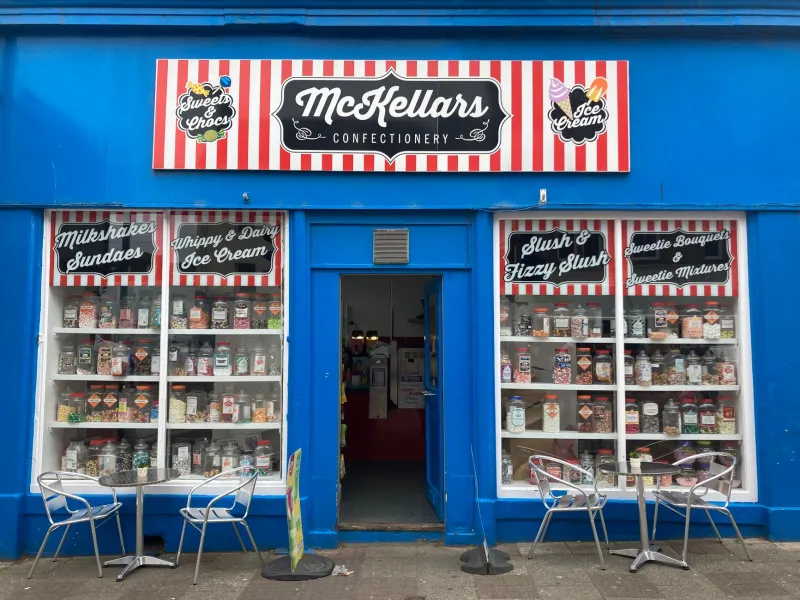
Cast your mind back to the corner newsagent. The jar of pear drops sitting on the top shelf, slightly sticky from years of sugary residue. The ritual of handing over a few coins and watching the shopkeeper scoop your chosen sweets into a white paper bag, twisted at the top with a practised flick of the wrist. For most Britons of a certain age, that memory is as vivid as any childhood photograph.
So it might come as a slight shock to find that a beautifully packaged tin of those very same pear drops now retails for upwards of £8 in a boutique confectionery shop — and that people are buying them in droves.
Something rather interesting has happened to the British sweet. Once the domain of pocket money and penny trays, traditional confectionery has undergone a quiet but unmistakable transformation. It has gone upmarket.
From the Pick-and-Mix to the Artisan Shelf
The story of how British sweets evolved from budget childhood treats into premium gifting products doesn't have a single turning point. It's more of a slow drift, shaped by a confluence of forces: changing consumer values, the nostalgia economy, and a genuine interest in quality ingredients that has touched nearly every corner of the food industry.
The closure of Woolworths in 2008 is often cited — perhaps a little sentimentally — as a watershed moment. With it went the nation's most iconic pick-and-mix counter. What followed wasn't the death of traditional sweets, but rather a reinvention. Smaller, independent confectioners stepped into the gap, often with a very different proposition: fewer sweets, better quality, and a story worth telling.
At Piccadilly Sweets, we've watched this shift unfold from our own corner of the market. The customers who come to us aren't just after something to eat on the bus home. They're after an experience — a connection to something they remember, or something they want to share with someone who does.
The Nostalgia Factor: More Powerful Than Any Marketing Budget
Nostalgia is a remarkably effective commercial force, and confectionery sits right at the heart of it. Food memories are among the most emotionally potent we carry, and sweets — tied as they are to childhood, to freedom, to the uncomplicated pleasure of something purely sweet — tap into that emotional reservoir with almost unfair efficiency.
Marketing professionals have long understood this, but what's changed in recent years is how explicitly the premium confectionery market has leaned into it. Heritage packaging — those vintage-style tins and kraft paper bags — isn't just aesthetic. It's a signal. It says: this is the real thing. It promises authenticity in an age when authenticity is perhaps the most coveted quality a product can claim.
But nostalgia alone doesn't justify a higher price point. Shoppers are savvier than that. What's kept the premium sweet market growing is the fact that many of these products genuinely are better made than their mass-market equivalents.
What 'Artisanal' Actually Means for a Humbug
When a confectioner describes their sweets as artisanal, it's easy to be a touch cynical. But spend a bit of time with the people actually making these things, and the word starts to earn its keep.
Traditional boiled sweets, for instance, require a level of skill that has genuinely become rare. Getting the temperature right, pulling the sugar at exactly the correct moment, incorporating flavour without losing clarity — these are techniques passed down through generations, and they are increasingly hard to find. Many of the small-batch producers supplying boutique sweet shops trained under confectioners who learned their craft in the mid-twentieth century, when sugar work was a respected trade with proper apprenticeships.
Ingredients matter enormously, too. The difference between a sherbet lemon made with natural citric acid and real lemon oil versus one made with synthetic flavouring is, frankly, considerable. Premium producers are sourcing higher-quality flavourings, avoiding artificial colours (a trend accelerated by the 2007 Southampton study linking certain additives to hyperactivity in children), and in some cases working with British sugar suppliers to reduce food miles and support domestic agriculture.
None of that comes cheap. And when consumers understand what they're paying for, they tend to accept the price far more readily.
The Gift Economy and the Sweet Spot
One of the most significant drivers of the premium confectionery market is the shift in how these products are being purchased. A growing proportion of traditional sweet sales are now gifts rather than personal treats. Beautifully packaged jars of bon bons, curated gift hampers featuring regional British sweets, personalised tins of a grandparent's childhood favourites — these have become genuinely popular present options, particularly for people who find conventional gifts a bit uninspired.
Gifting changes the economics entirely. When you're buying something for yourself, a £6 bag of cola cubes might feel indulgent. When you're buying it as a birthday present for someone who grew up in the 1970s, it feels thoughtful, personal, and frankly rather good value compared to a generic candle or a bottle of mediocre wine.
This is something we see constantly at Piccadilly Sweets. Customers come in looking for something that says I remembered what you love — and traditional British sweets, with all their regional quirks and personal associations, do that job beautifully.
Regional Identity and the Rediscovery of Local Sweets
Another dimension to this story is the growing interest in regional British confectionery. Whilst London's sweet shops tend to stock a fairly familiar roster of national favourites, there's been a quiet revival of interest in sweets with specific geographic roots — Kendal Mint Cake from Cumbria, Edinburgh Rock from Scotland, Blackpool rock from Lancashire, Pontefract cakes from West Yorkshire.
For many buyers, these aren't just sweets. They're edible souvenirs, tangible links to a particular place or heritage. The premium market has recognised this and responded with products that celebrate provenance explicitly — naming the region, the producer, sometimes even the specific recipe's age.
In a food culture increasingly preoccupied with where things come from and how they're made, traditional British sweets — with their long histories and strong regional identities — are actually rather well positioned.
Is This Sustainable, or Just a Trend?
The obvious question is whether the premiumisation of British confectionery is a lasting shift or simply a wave of nostalgia that will eventually crest and recede.
The evidence, on balance, suggests it's here to stay — though perhaps not without some evolution. The generation currently buying premium sweets as gifts will eventually become the generation receiving them, and their children will grow up with a different set of sweet memories. What counts as 'nostalgic' will shift.
What won't change, we suspect, is the fundamental appeal of something made with care, steeped in history, and capable of transporting you — just for a moment — back to something simpler. That's not a trend. That's a very human need.
And if it comes wrapped in a lovely tin with a Piccadilly postcode on the label, so much the better.