Before the NHS, There Was the Sweet Shop: Britain's Forgotten Confectionery Cure-Alls

Photo: vintage British apothecary sweet shop lozenges medicinal herbs, via i.fbcd.co
There's a particular kind of British grandmother who, when presented with any complaint from a sore throat to a rumbling stomach, reaches wordlessly into her handbag and produces a paper bag of something hard, slightly sticky, and aggressively mentholated. You take one without argument. Within minutes, you feel — if not cured — at least attended to.
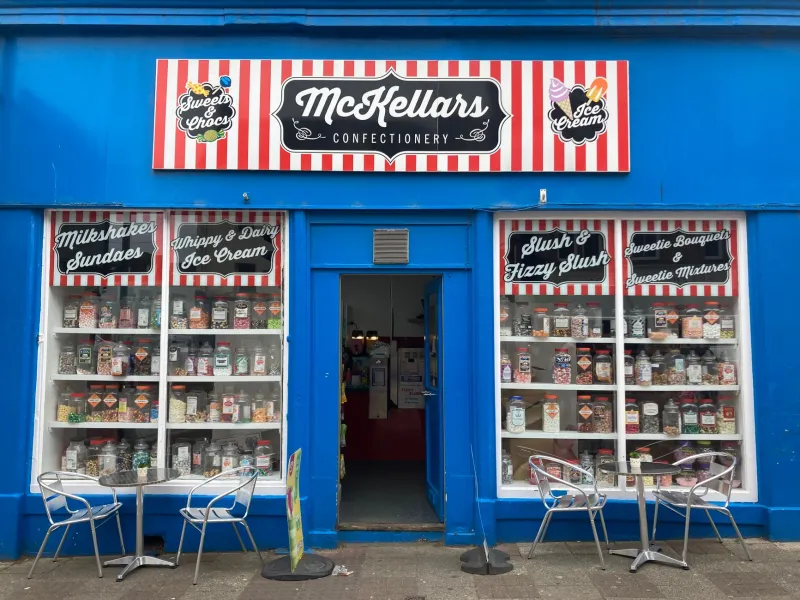
This instinct didn't come from nowhere. For a very long time in this country, the sweet shop and the pharmacy were, in practical terms, the same place.
Sugar as Medicine: A History Worth Revisiting
The relationship between confectionery and medicine in Britain stretches back centuries further than most people realise. When sugar first arrived in significant quantities during the medieval period, it was classified not as a food but as a spice — and a medicinal one at that. Apothecaries dispensed it alongside herbs and tinctures, and the earliest sweets were essentially pills made palatable.
By the Georgian era, this overlap had become firmly embedded in British commercial life. Chemists sold sugared lozenges alongside their tonics. Street vendors hawked boiled sweets that promised to ease digestion, clear the chest, or settle the nerves. The sweet shop, when it emerged as a distinct retail space in the 18th and 19th centuries, inherited this therapeutic tradition almost by accident — and ran with it.
Peppermint, long understood as a digestive aid, became one of the most popular sweet flavours in the country. Liquorice, with genuine laxative and anti-inflammatory properties, formed the backbone of an entire category of British confectionery. Aniseed, ginger, clove, and horehound all moved freely between the confectioner's shelf and the apothecary's cabinet. Fisherman's Friend lozenges, first produced in Fleetwood in 1865 to help trawlermen cope with the brutal conditions of the North Sea, are perhaps the most famous example — a product that began as a medicinal preparation and became one of Britain's best-loved sweets almost by osmosis.
The Corner Shop Consultation
For working-class communities in Victorian and Edwardian Britain, access to formal medical care was limited, expensive, and frequently unreliable. The local sweet shop filled the gap in ways that have been largely written out of social history.
"The confectioner knew their regulars," explains food historian Dr. Patricia Roe, who has spent the last decade researching the social role of British sweet shops. "They knew who had a weak chest, who suffered with their digestion, whose children were prone to earache. They'd recommend specific sweets with the same confidence a pharmacist recommends an antihistamine today — and often with similar results, because many of these preparations genuinely worked."
Horehound candy, now almost vanished from British shelves, was a staple cough remedy. Barley sugar was recommended for nausea and as a restorative for the weak. Ginger chews were the standard prescription for travel sickness long before anyone had invented the car. Violet sweets — popular in Edwardian times — were believed to soothe headaches. The evidence for most of these claims was anecdotal, but the active compounds in many of these botanicals have since been validated by modern pharmacology.
Reviving the Recipe
A small but determined group of British confectioners are now looking back at this tradition with fresh eyes — and finding it more relevant than they expected.
Hannah Mercer runs a small batch sweet-making operation in Yorkshire, producing what she describes as "functional confectionery" — sweets formulated with specific wellness benefits in mind, using traditional British recipes as her starting point. Her range includes a ginger and black pepper chew for digestion, a liquorice and fennel drop for bloating, and a peppermint humbug made with a significantly higher oil content than most commercial versions.
"I didn't set out to make health food," she says, laughing. "I set out to make proper sweets. But when I started researching old recipes, I kept finding these detailed notes about what each sweet was supposed to do for you. The confectioners of the past weren't being fanciful — they were drawing on centuries of herbal knowledge. I just thought, why did we stop?"
The answer, broadly, is the NHS. When universal healthcare arrived in 1948, the informal therapeutic role of the sweet shop became redundant almost overnight. Confectionery pivoted sharply towards pure pleasure — brighter colours, more sugar, less botanical complexity. The medicinal associations that had given many classic sweets their identity were quietly dropped from the marketing, if not from the recipes themselves.
What Still Works
Here's the thing: the science hasn't gone away. Peppermint oil genuinely relaxes the muscles of the gastrointestinal tract — it's prescribed in capsule form for IBS. Liquorice root contains glycyrrhizin, a compound with proven anti-inflammatory and antiviral properties. Ginger's effectiveness against nausea is supported by multiple clinical trials. The horehound plant contains marrubiin, which modern research suggests has real bronchodilatory effects.
None of this means you should swap your GP appointment for a bag of sports mixture. But it does suggest that some of what the Victorian sweet shop was doing wasn't entirely without foundation.
For confectioners like Mercer, the opportunity lies not in making medical claims — which is, understandably, a regulatory minefield — but in reconnecting people with the idea that what you eat can do more than just taste good.
"People are so interested in functional food right now," she says. "Adaptogens, nootropics, all of that. And I'm standing here with a 200-year-old recipe for a ginger drop that does exactly what people are spending a fortune on in health food shops. It just comes in a slightly more charming wrapper."
A Tradition Worth Tasting
At Piccadilly Sweets, we've always believed that the best British confectionery carries something more than sugar — a history, a craft, a sense of place. The therapeutic tradition of British sweets is part of that story, and it's one that deserves to be better known.
Next time you reach for a peppermint cream or unwrap a piece of crystallised ginger, spare a thought for the generations of confectioners who weren't just satisfying a sweet tooth — they were, in their quiet, practical way, keeping the nation well. Not a bad legacy for a bag of boiled sweets.