A Penny for Your Thoughts, Tuppence for a Sherbet: How Sweet Prices Have Always Reflected the Nation's Mood
There's something quietly revealing about the way Britons talk about sweet prices. Ask someone what they paid for a quarter of Pear Drops in 1978 and they'll tell you immediately, precisely, and with a faint note of outrage that the modern equivalent costs considerably more. Ask them what they paid for a restaurant meal the same year and you'll get a shrug. Sweets are different. Their prices live in us.
This isn't accidental. For most of British history, confectionery has occupied a peculiar economic position — cheap enough to be democratic, special enough to feel like a treat. The price of a bag of sweets has tracked the nation's fortunes with unusual fidelity, and the story it tells is worth unpicking.
The Victorian Sweet Shop: Democracy in Sugar
Before the mid-nineteenth century, sugar was a luxury. Confectionery was the preserve of the wealthy, sold in elegant establishments that had no interest in the custom of working-class families. The industrial revolution changed everything. Mass sugar production, mechanised confectionery manufacturing, and the proliferation of small corner shops created an entirely new market — sweets as everyday indulgence, available to almost everyone.
By the 1880s, a farthing — a quarter of a penny — could buy a child two or three boiled sweets from a jar. A penny might get you a small paper bag of mixed toffees. These were not trivial amounts for a Victorian working family, but they were achievable amounts, and that distinction mattered enormously. The sweet shop became a genuinely democratic institution, a place where a factory worker's child and a shopkeeper's child stood at the same counter with the same coins.
The penny tray — a flat display of individually priced sweets at one penny each — was a Victorian innovation that would echo forward through the century. Its spiritual descendants are still visible in pick 'n' mix counters today.
War, Rationing, and the Psychology of Scarcity
The two world wars transformed British confectionery economics in ways that still reverberate. Sugar rationing during the First World War introduced a generation to the concept of sweets as something that could be withheld — a lesson in scarcity that made the return of full shelves feel genuinely celebratory.
The Second World War's rationing was more severe and lasted longer, with sweets remaining rationed until 1953. The end of sweet rationing is one of those small historical moments that carries genuine emotional weight. Photographs from the day show children at sweet shop counters with expressions of barely contained disbelief. For a generation that had grown up measuring out their weekly two ounces, the sudden abundance was almost incomprehensible.
The prices of the immediate post-war period reflect this psychology of relief. Confectioners who might have charged a premium in a free market instead kept prices accessible — partly from commercial pragmatism, partly from something that looks, in retrospect, like genuine fellow feeling.
The Decimal Disruption
Decimalisation in 1971 caused a pricing convulsion that British sweet buyers of a certain age still discuss with some feeling. Pre-decimal prices had a granularity that suited confectionery perfectly — the halfpenny, the penny, the threepenny bit all mapped neatly onto the economics of individual sweets and small bags. The new decimal system, with its larger base units, initially pushed prices upward in ways that felt, to many customers, arbitrary and unfair.
This wasn't unique to sweets, of course. But because sweet prices were so closely tracked, so embedded in daily life, the disruption was felt particularly keenly. Confectioners who managed the transition sensitively — maintaining familiar portion sizes, communicating price changes honestly — built loyalty that lasted decades.
The Pick 'n' Mix Paradox
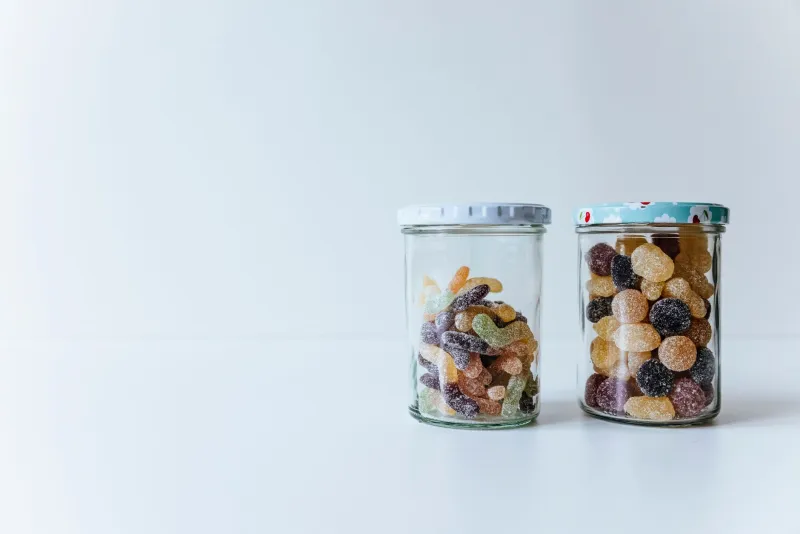
One of the most psychologically interesting phenomena in British confectionery pricing is the enduring appeal of pick 'n' mix. By almost any rational measure, buying sweets individually from a shared container is an expensive way to shop. The price per gram of a hand-selected mix typically exceeds that of a sealed bag significantly.
And yet pick 'n' mix continues to feel like better value to most people who engage with it. The reasons are partly about control — you choose exactly what you want, eliminating the sweets you'll leave at the bottom of the bag — and partly about the ritual of selection itself. There's also a legacy effect: pick 'n' mix has its roots in an era when sweets really were sold individually, and the format carries that memory of accessible, democratic pricing even when the reality no longer quite matches.
Similar psychology applies to the perception that traditional British sweets — Dolly Mixtures, Jelly Babies, Cola Bottles — represent better value than premium chocolates. Gram for gram, this is sometimes true and sometimes not. But the association of these sweets with childhood abundance, with bags rather than individual pieces, with sharing rather than savouring, makes them feel generous in a way that a single truffle never quite does.
The Modern Squeeze
Today's confectionery market faces pressures that would have been unrecognisable to a Victorian sweet shop owner. Ingredient cost volatility, supply chain disruption, energy price spikes, and the particular horror of shrinkflation — the practice of reducing product size while maintaining price — have all reshaped the economics of the British sweet.
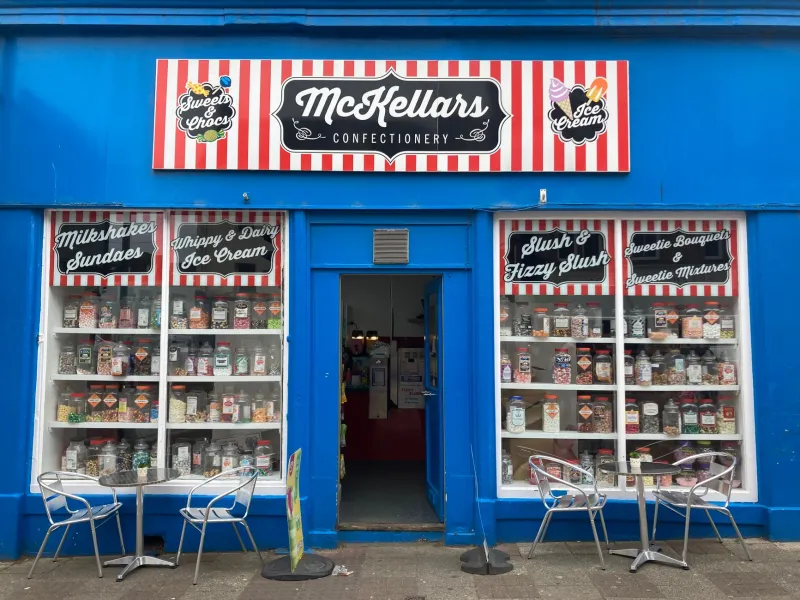
Confectioners working in the traditional mode face a particular challenge. Handmade boiled sweets, produced in small batches using copper pans and time-honoured recipes, cannot absorb cost increases the way industrial producers can. The price of a bag of traditionally made Humbugs from a specialist shop will always be higher than its supermarket equivalent, and communicating the value of that difference to a price-conscious consumer is an ongoing conversation.
What hasn't changed is the emotional calculus. A bag of sweets still feels, to most Britons, like something that should be affordable — a small pleasure within reach. When prices rise noticeably, the reaction is disproportionate to the actual financial impact, because what's being disrupted isn't just a purchase but a relationship with a particular idea of what sweets are and what they represent.
Perhaps that's the most revealing thing about British sweet pricing. It's never purely economic. It's always, at least partly, about who we think we are.