Hard or Soft: The Great British Sweet Debate That Nobody Wants to Settle
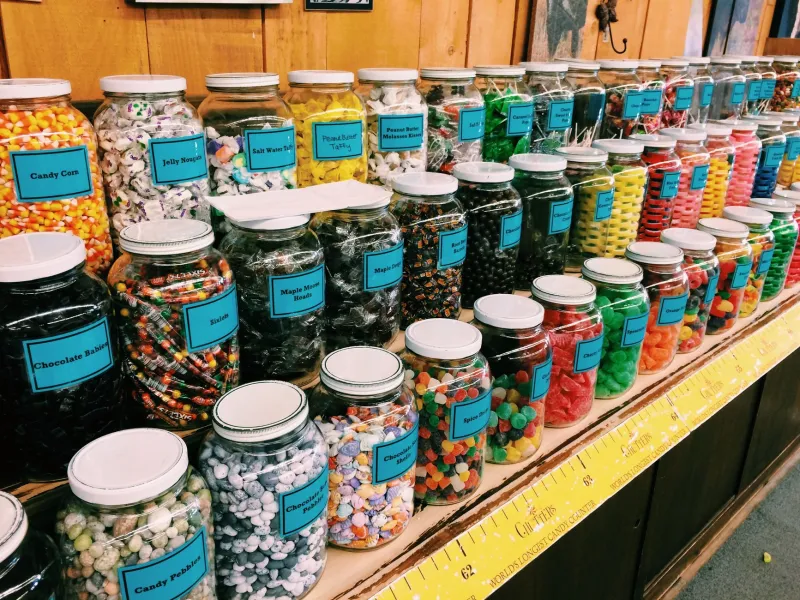
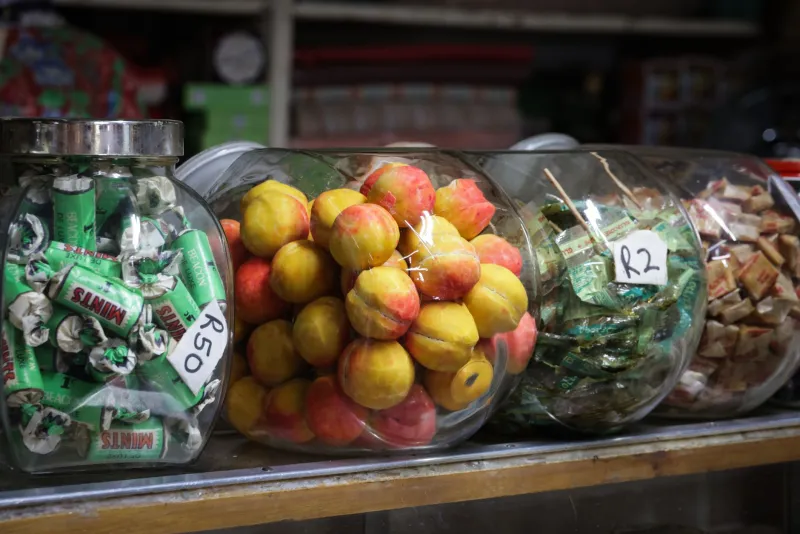
Walk into any traditional sweet shop and you'll see it playing out in real time. On one side of the counter, jars of gleaming boiled sweets — pear drops, lemon sherbets, butterscotch, clove balls — catching the light like stained glass. On the other, trays of gummy bears, foam bananas, jelly teeth, and cola bottles jostling for attention. Two very different worlds. Two very devoted fanbases. And absolutely no sign of a peace treaty.
The debate between hard boiled sweets and gummies isn't new, but it's become more pointed in recent years as global confectionery trends push ever harder into British territory. So what's actually going on? Why does Britain seem incapable of committing to either camp — and does that ambivalence tell us something interesting about who we are as a nation of sweet lovers?
A Tale of Two Textures
Let's start with the obvious: these are completely different eating experiences. A boiled sweet demands patience. You pop it in, let it sit on your tongue, and wait for it to give up its flavour slowly — a long, contemplative relationship between sweet and mouth. A gummy, by contrast, is immediate. You bite in, the texture yields, the flavour hits at once, and it's done in seconds. One is a slow Sunday afternoon; the other is a quick espresso.
Neither is wrong. That's rather the point.
British confectionery has always made room for both approaches, even if it hasn't always acknowledged them equally. Boiled sweets carry the weight of history — they've been made in this country since at least the 1800s, and their manufacture is deeply tied to regional identity. Harrogate toffee, Edinburgh rock, Blackpool rock, Kendal Mint Cake — all of them products of the same basic process: sugar heated to hard crack, flavoured, shaped, cooled. It's an art form with roots.
Gummies arrived later, largely via Germany (Haribo was founded in 1920) and the American market, gaining serious British traction through the pick 'n' mix culture of the 1980s and 90s. They were newer, bouncier, and — crucially — fun in a way that felt different from the quiet pleasures of a humbug.
The Nostalgia Factor
Here's where things get complicated. Ask someone over 45 about their favourite childhood sweet and the odds are strong they'll name something from a glass jar: sherbet lemons, rhubarb and custards, cola cubes, pineapple chunks. These are the sweets of corner shops and Saturday pocket money and the specific pleasure of a white paper bag twisted at the top.
Ask someone in their twenties and you're more likely to hear about Tangfastics, Haribo Starmix, or some variation on a foam sweet. Their nostalgia is equally real — just anchored to different objects.
This generational split is something confectioners have been quietly navigating for years. Traditional sweet makers aren't blind to the shift. They've watched gummy sales climb steadily while boiled sweet consumption has — depending on who you ask — plateaued or declined among younger buyers. The question isn't whether to acknowledge gummies; it's how to stay relevant without losing what makes traditional British confectionery worth preserving in the first place.
"We'd never abandon our boiled sweet lines," says one Yorkshire-based confectioner who's been making the same recipes for three generations. "But we're not precious about adding something new if it's done properly. The problem is a lot of mass-market gummies are just gelatine and artificial colour. We want to make something that actually tastes of something."
That tension — quality versus accessibility, tradition versus trend — runs through the whole conversation.
What the Ingredients Actually Tell Us
There's a meaningful difference in how the two types of sweets are made, and it matters more than you might think. A well-made boiled sweet uses relatively few ingredients: sugar, glucose syrup, flavouring, sometimes natural colour. The skill is entirely in the process — getting the temperature right, working the sugar correctly, achieving that characteristic clarity and sheen. There's nowhere to hide.
Gummies, particularly the cheaper end of the market, can mask a lot behind gelatine, citric acid, and heavy artificial flavouring. But premium gummies — made with real fruit juice, natural colours, and proper gelatine content — are a genuinely different proposition. Several British artisan confectioners have started producing gummies they're genuinely proud of, using the same philosophy that governs their boiled sweet production: good ingredients, honest flavour, no shortcuts.
It's worth noting that the vegan market has also reshaped this conversation. Gelatine-free gummies, made with pectin or starch, have opened up the category to consumers who'd previously been excluded from it. Boiled sweets, which have always been naturally gelatine-free, have benefited from this too — suddenly the humble fruit drop looks rather modern.
The Pick 'n' Mix Problem
If there's one format that's kept both camps in conversation, it's pick 'n' mix. The great democratic leveller of British confectionery — you take what you want, leave what you don't, and nobody judges you for filling half your bag with foam shrimps and the other half with aniseed twists.
Pick 'n' mix is where the boiled sweet and the gummy have coexisted longest and most peacefully. In that context, choosing sides feels almost beside the point. You don't have to be a boiled sweet person or a gummy person — you can be both, simultaneously, standing in front of a row of trays with a pair of tongs and absolutely no regrets.
It's a very British solution, when you think about it. Rather than resolve the argument, just put everything in the same bag.
Does Britain Actually Need to Choose?
Probably not — and perhaps that's the most honest answer available. The idea that boiled sweets and gummies are in direct competition assumes that sweet lovers have fixed, exclusive preferences. In reality, most people are perfectly happy to eat a rhubarb and custard on Tuesday and a bag of cola bottles on Friday without experiencing any particular crisis of identity.
What matters, ultimately, is quality and intention. A boiled sweet made with care, using a recipe that's been refined over decades, is a genuinely special thing. So is a gummy made with real fruit flavour and the right amount of chew. The enemy isn't the other format — it's the mass-produced, flavourless, corner-cutting version of either.
At Piccadilly Sweets, we've always believed that British confectionery is broad enough to hold its traditions and its evolutions at the same time. The glass jars stay. The recipes stay. But there's room on the counter for something new, as long as it's made with the same care.
The debate will continue, of course. It wouldn't be British if it didn't.