Painted in Nature: The Forgotten Art of Colouring British Sweets Without a Drop of Artificial Dye
There's a particular shade of red you'll find in a traditional raspberry drop — something between a fire engine and a winter berry — that feels almost impossibly vivid for something that started life as a boiled sugar syrup. For most of the twentieth century, that colour came from a bottle of synthetic dye. But for hundreds of years before that, it came from something far more surprising: a tiny, dried insect harvested on the other side of the world.
The history of colour in British confectionery is a story that doesn't get nearly enough attention. We talk endlessly about flavour, texture, and the nostalgic pull of a quarter bag of pear drops. But colour? Colour was chemistry, craft, and occasionally a bit of quiet alchemy — long before food scientists in white coats ever got involved.
The Insect in Your Bon-Bon
Cochineal has been colouring food and fabric since at least the 16th century, when Spanish conquistadors encountered it in Mexico and promptly shipped it home. The dye comes from the Dactylopius coccus — a scale insect that feeds on prickly pear cacti — and when dried and crushed, it produces carminic acid, one of the most stable and vivid red pigments ever found in nature.
By the Georgian era, it was a staple of the British confectioner's workbench. Sugar boilers and sweet makers used it to tint hard-boiled sweets, fondants, and sugar-paste decorations. It was reliable, it didn't fade under heat the way some plant-based alternatives did, and crucially, it produced that deep, saturated crimson that customers had come to expect.
What's remarkable is that cochineal is still used today — it appears on ingredient labels as E120 or simply "carmine" — and a growing number of artisan confectioners are actively choosing it over synthetic alternatives precisely because it's natural. At a small batch sweet maker in Yorkshire we spoke to recently, the owner described it plainly: "Carmine gives you a red that sings. Nothing synthetic quite matches it, and once people understand where it comes from, most of them are completely fine with it."
Saffron, Turmeric, and the Golden Age of Yellow
If red had its insect, yellow had its spice rack. Saffron — those slender crimson threads harvested from Crocus sativus — was used to colour everything from Tudor marchpane to Victorian sugar almonds. It's fabulously expensive, which is partly why turmeric (far more affordable and almost as vivid) eventually became the workhorses of the yellow palette in commercial confectionery.
Saffron's colouring compound, crocin, is water-soluble and produces a warm, honeyed gold rather than a sharp canary yellow. Confectioners who still use it describe the colour as having a kind of depth — a luminosity — that synthetic dyes don't replicate. It also carries a faint flavour, which means using it requires a degree of skill; too much and your lemon sherbet tastes faintly of paella.
Turmeric, by contrast, is more forgiving and more punchy. Its active colouring compound, curcumin, produces a bright, almost neon yellow that was widely used in boiled sweets and sugar-coated confections throughout the 19th and early 20th centuries. Some heritage sweet makers still use it today, blending it with other naturals to achieve the exact shades their Victorian recipes call for.
The Purple Problem
If you've ever tried to make a natural purple, you'll know it's confectionery's great unsolved headache. Blue is genuinely difficult to source from nature — butterfly pea flower has become fashionable recently, and some makers experiment with purple sweet potato or blackcurrant concentrate — but historically, violet and purple hues were among the trickiest to achieve consistently.
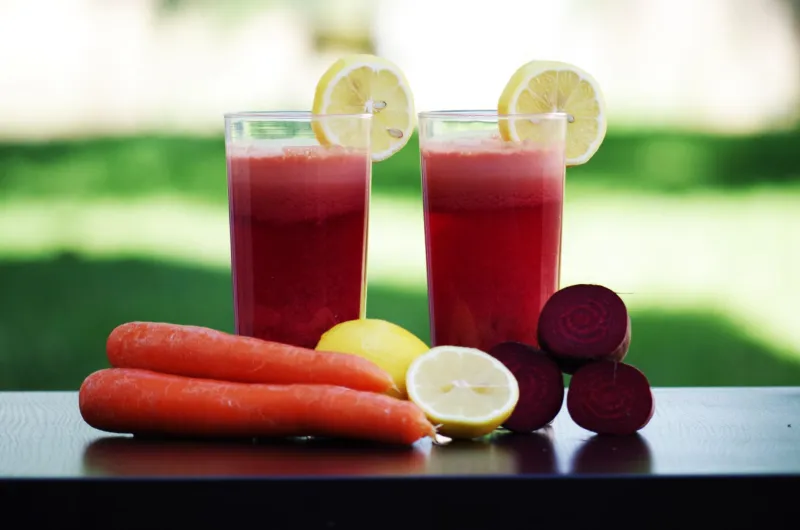
Beetroot was the traditional British answer for pinks and deep reds with a purplish cast. Its pigment, betanin, is sensitive to heat and acidity, which made it unreliable in high-temperature sweet production. Skilled confectioners learned to add it at lower temperatures or use it in applications like sugar paste and fondant where it could be incorporated without cooking. Even then, it had a tendency to fade or shift towards brown over time — a problem that sent many sweet makers towards synthetic alternatives the moment they became available in the late 19th century.
The return to beetroot-based colours today requires working around these same limitations, and the confectioners doing it have developed real expertise. One maker in the West Midlands told us she now uses a concentrated beetroot extract that's been stabilised specifically for confectionery use. "It still takes practice," she admits. "You learn to work with its quirks rather than fighting them."
Why Synthetic Dyes Won (And Why They're Losing Ground)
The shift towards artificial colourants in the 20th century wasn't born of laziness — it was a response to genuine commercial pressures. Synthetic dyes were cheaper, more consistent, and more stable under the conditions of industrial production. For a factory turning out millions of sweets a week, the unpredictability of natural pigments was simply incompatible with quality control.
But the tide has been turning for some time. Following a 2007 study linking certain artificial food dyes to hyperactivity in children, the Food Standards Agency recommended that manufacturers voluntarily phase out six specific synthetic colours. Many did. And in the years since, consumer appetite for "clean label" products — those with recognisable, natural ingredients — has pushed more and more confectioners to revisit the old methods.
For small-batch and artisan sweet makers, this has been an opportunity rather than a burden. The skills involved in working with natural colours are genuinely interesting, the results are often more complex and characterful than anything synthetic, and customers are increasingly willing to pay a premium for sweets they can feel good about eating.
The Craft in the Colour
What strikes you, speaking to confectioners who've gone deep into natural colouring, is how much knowledge is involved. It's not simply a matter of swapping one ingredient for another. You need to understand how a pigment behaves under heat, how it interacts with acidity and sugar concentration, how it changes over time and in different light conditions. It's closer to dyeing fabric than it is to following a recipe.
At Piccadilly Sweets, this kind of craft is exactly what we celebrate. The sweets that line our shelves carry decades — sometimes centuries — of accumulated knowledge in every batch. When you pick up a bag of violet creams or a twist of old-fashioned barley sugar, you're holding the result of generations of experimentation, refinement, and genuine skill.
The confectioners returning to natural colours aren't just making a marketing choice. They're reconnecting with a tradition that existed long before anyone thought to synthesise it — one that understood, instinctively, that the best ingredients were usually the ones you could find growing somewhere, or harvested from something alive.
There's something quietly wonderful about that. A sweet that gets its red from a cactus insect, its yellow from a crocus, its pink from a root vegetable. Nature, boiled down and pulled into shapes, wrapped in a twist of cellophane and sold for a few pence a quarter.
Some things don't need improving. They just need remembering.