Quarter Bags and Corner Shops: The Sweets That Made Us Who We Are
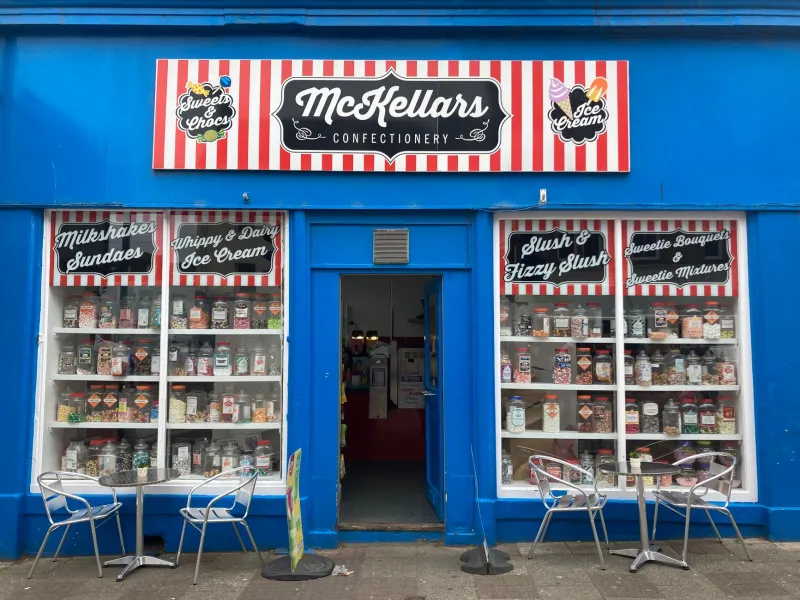
There's a particular kind of magic that happens when you push open the door of an old-fashioned sweet shop. The bell above the door gives a little jangle, the air smells faintly of sugar and aniseed, and suddenly you're eight years old again, clutching a warm fifty-pence piece and staring at rows of jars with the focused intensity of someone making a genuinely life-altering decision.
British confectionery has always been about more than just the sweets themselves. It's about the ritual. The deliberation. The moment you hand over your coins and watch the shopkeeper tip your chosen treasures into a small paper bag, twisting the top with a practised flick of the wrist. For generations of children across the UK, that experience was a cornerstone of growing up — and the sweets themselves became something close to cultural shorthand.
The Penny Sweet Economy
Before inflation made the concept essentially meaningless, penny sweets were a genuine institution. A single coin could buy you a Refresher, a foam shrimp, a cola bottle, or a small square of fudge. The economics of the corner shop sweet counter were perfectly calibrated to a child's pocket money, and that accessibility was everything.
Liquorice Allsorts, invented almost entirely by accident in 1899 when a sales rep fumbled his samples and mixed them all together, became one of the great democratising forces of British confectionery. You didn't need to have good taste or even a clear preference — you just needed to reach into the bag and see what came out. The randomness was the point. Each Allsort had its own texture, its own balance of sweet and bitter, and learning which ones you liked (and which ones you'd trade away at school) was a minor but meaningful act of self-discovery.
Flying Saucers were something else entirely. Those fragile rice paper shells, fizzing faintly with sherbet on the inside, felt genuinely other-worldly to a child in the 1980s or 90s. They dissolved on your tongue in a way that seemed almost miraculous. Nobody was quite sure what flavour they were meant to be, but that ambiguity was part of their charm.
Sherbet, Sticks, and Shared Rituals
The Sherbet Dip — a paper sleeve containing a stick of liquorice and a small mountain of powdered sherbet — was less a sweet and more a full sensory experience. You licked the liquorice, dipped it into the sherbet, and then spent the next ten minutes with white powder around your mouth and a tingling sensation on your tongue. It was chaotic, slightly impractical, and completely wonderful.
What's striking, looking back, is how social so much of this confectionery was. Sweets were shared, swapped, and bartered. You'd trade your Drumstick lolly for someone else's Black Jack chews, or split a bag of Midget Gems with your best friend on the walk home from school. The sweets themselves became a kind of currency — not just financial, but emotional. Offering someone a sweet was an act of friendship. Refusing to share was a minor social transgression.
This communal dimension is something that rarely gets discussed when people talk about the appeal of traditional British confectionery, but it's arguably the most important part. These weren't luxury items to be savoured privately. They were everyday treats designed to be enjoyed together, out in the open, on the way somewhere.
Why Nostalgia Hits So Hard
Ask any British adult about their favourite childhood sweet and watch their face change. There's almost always a moment of genuine emotion — a softening around the eyes, a slight smile. Sweets like Parma Violets, Pear Drops, and Aniseed Balls trigger something deep and immediate in the memory, partly because smell and taste are so closely linked to emotional recall, and partly because those sweets are so strongly associated with a specific time and place in our lives.
Psychologists sometimes call this the 'Proustian effect' — the way a single sensory experience can collapse decades and transport you back to a specific moment with startling clarity. For many people in the UK, that trigger isn't a madeleine dipped in tea. It's a Sherbet Fountain, or the specific waxy sweetness of a Wham bar, or the satisfying crack of a piece of Edinburgh Rock.
There's also something to be said for the simplicity of those early sweet experiences. Childhood sweets didn't need to be sophisticated. They just needed to be sweet, bright, and fun. In an era of increasingly complicated food culture, there's a genuine comfort in something that makes no pretensions whatsoever about what it is.
What Sweet-Makers Can Learn From the Past
The enduring appeal of traditional British confectionery isn't really a mystery, even if it's sometimes treated as one. These sweets worked because they were accessible, memorable, and tied to shared experiences. They created rituals around themselves — the corner shop visit, the paper bag, the careful selection — that gave them meaning beyond their ingredients.
Modern confectioners who want to tap into that well of feeling don't need to simply recreate the past (though there's certainly a market for that). What they need to understand is the emotional architecture that made those sweets matter. It wasn't just about flavour. It was about participation. About being part of something — a generation, a neighbourhood, a shared cultural moment.
Here at Piccadilly Sweets, that's something we think about a great deal. Traditional confectionery, lovingly made, isn't just a description of a product. It's a commitment to the idea that sweets should mean something. That they should be worth remembering. Because the best sweets don't just taste good in the moment — they stay with you for decades, tucked away in some warm corner of your memory, ready to surface at the first hint of aniseed or the sight of a striped paper bag.
And that, really, is the most impressive thing any confection can do.