The Shops That Made Our Sweet Tooth: How London's Great Confectioners Decided What Britain Would Love
There's a reason we talk about Piccadilly the way we do when it comes to sweets. Not just as a place on a map, or a stop on the Tube, but as a kind of shorthand for a certain standard — a benchmark of quality that the British confectionery world quietly measured itself against for well over a hundred years. If your sweet made it onto the shelves of a prestigious West End confectioner, you'd arrived. If it didn't, you were regional at best, forgotten at worst.
That might sound like an exaggeration. It isn't.
The Golden Mile of Sugar
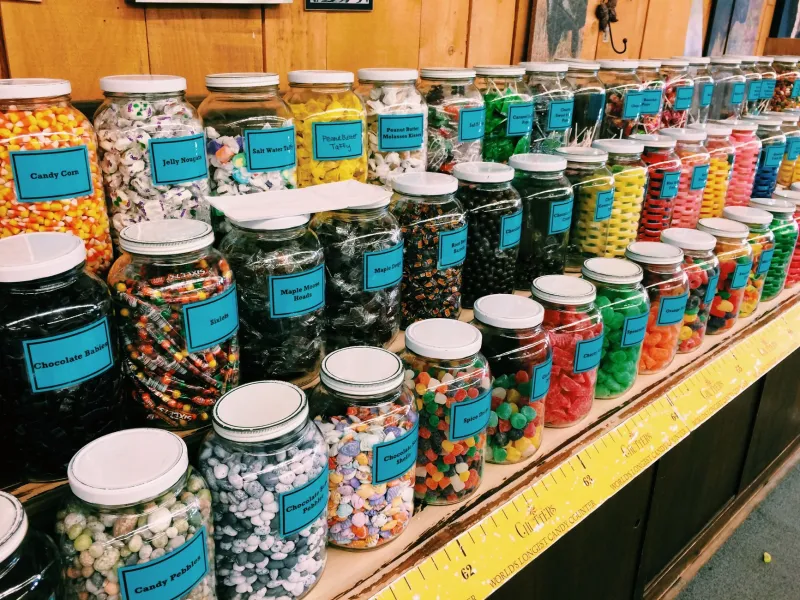
From the mid-Victorian era onwards, the stretch of London running from Piccadilly Circus through St James's and into Mayfair was home to some of the most influential sweet shops Britain has ever seen. These weren't your corner-shop penny-sweet operations. They were proper establishments — polished counters, glass jars arranged like jewellery, staff who knew the difference between a humbug and a bull's-eye and weren't afraid to tell you. Fortnum & Mason had been selling confectionery from its Piccadilly address since the 1700s. Charbonnel et Walker, nestled in the Royal Arcade just off Bond Street, became the go-to for chocolate boxes so beautifully presented they felt more like gifts from a museum than something you'd actually eat.
These shops weren't just retailers. They were tastemakers. And the British public, with its deep-seated respect for anything with a London address and a bit of heritage behind it, paid close attention to what they were selling.
What Got Stocked, What Got Forgotten
The mechanics of this influence are worth understanding, because they weren't accidental. The great West End confectioners had buyers — often the proprietors themselves — who travelled the country sampling from small regional producers, visiting factory floors, and deciding what deserved a wider audience. A boiled sweet maker in Yorkshire or a toffee producer in Lancashire might produce something genuinely brilliant, but without the nod from a London shop, their reach stayed local.
Conversely, when Fortnum's or one of their contemporaries decided to champion a particular sweet — say, a specific style of crystallised violet, or a hand-pulled barley sugar — that product gained an almost instant legitimacy. It would appear in newspaper columns, get mentioned in society diaries, find its way into the hampers sent to country houses. The West End shop had effectively decided: this is what quality looks like.
The sweets that didn't make that cut faced a harder road. Some survived through sheer regional loyalty — think of the way Pontefract cakes clung on in Yorkshire, or Edinburgh rock maintained its identity in Scotland. But plenty of others simply faded, their makers unable to survive without the kind of endorsement that only a prestigious London address could provide.
The Class Dimension Nobody Talks About
There's an uncomfortable truth tucked inside all of this, and it's worth saying plainly: the gatekeeping role of these shops was bound up with class in ways that shaped British confectionery for generations. The sweets that got the West End treatment tended to be the more refined ones — chocolate creams, sugared almonds, hand-dipped truffles, delicate fondants. The rougher, chewier, stickier sweets — the ones that came in paper bags and cost a farthing — those were for the market stall, not the mahogany counter.
This distinction didn't just affect which sweets got made. It affected how confectionery was talked about, written about, and ultimately remembered. The 'elevated' sweets accumulated histories, got written into cookery books, appeared in Victorian novels. The humbler ones were consumed and forgotten, their recipes often lost because nobody thought them worth recording.
The irony, of course, is that it's often those rougher, more democratic sweets — the sherbet lemons, the rhubarb and custards, the aniseed twists — that people feel most nostalgic about today. The fancy fondants are largely gone. The penny sweets endure.
How the Legacy Lingers
You might think all of this is ancient history, but the influence of those great London confectioners is more present than it seems. Many of the traditional sweets that survive today — the ones you'll find in a proper sweet shop, the ones that get packaged up in vintage-style tins and sold as 'classic British confectionery' — owe their continued existence in part to the fact that they once had a prestigious champion.
Fortnum & Mason still sells confectionery from its Piccadilly store, and the weight of that address still carries meaning. When a small artisan producer gets a listing there, it changes things for them — the press attention, the gifting market, the sense of legitimacy. The mechanism is older than any of us, but it still turns.
There's also the question of what we've lost. Researchers and food historians who've spent time in Victorian trade catalogues and confectionery manuals consistently find sweets that simply don't exist any more — flavours, textures, and forms that never made it through the various filters of taste, commerce, and London's editorial eye. Some were genuinely obscure. Others sound extraordinary, and you find yourself wondering whether they'd have survived if they'd caught the right buyer's attention at the right moment.
What a Sweet Shop Owes to Its Address
When we talk about Piccadilly and confectionery in the same breath — as we do, rather a lot — part of what we're acknowledging is this history. The idea that where something is sold matters. That provenance and presentation are part of the product. That a sweet isn't just sugar and flavouring; it's a story, a standard, a small act of cultural transmission.
The best independent sweet shops operating today understand this intuitively. They're not just selling sweets off a shelf. They're curating a version of British confectionery history, deciding what deserves to be remembered, what ought to be revived, and what can be allowed to rest. In that sense, they're doing exactly what the great Piccadilly confectioners did — just with less mahogany and rather more Instagram.
The gatekeepers have changed. The gate, in its way, remains.
And if you've ever wondered why certain sweets feel more 'official' than others — why some have heritage branding and royal warrant holders behind them while equally delicious alternatives vanished without trace — now you know who to thank. Or blame, depending on how you feel about crystallised violets.