Copper Pans and Bare Hands: The Lost Craft of Getting British Sweets Just Right
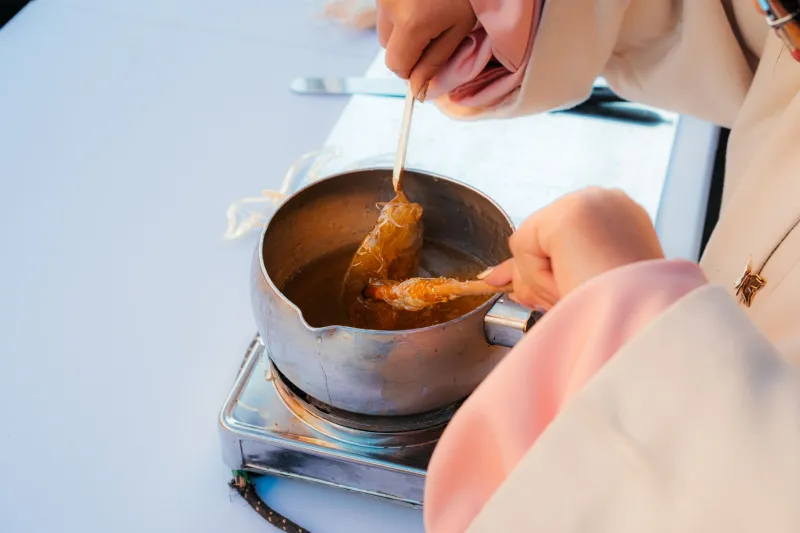
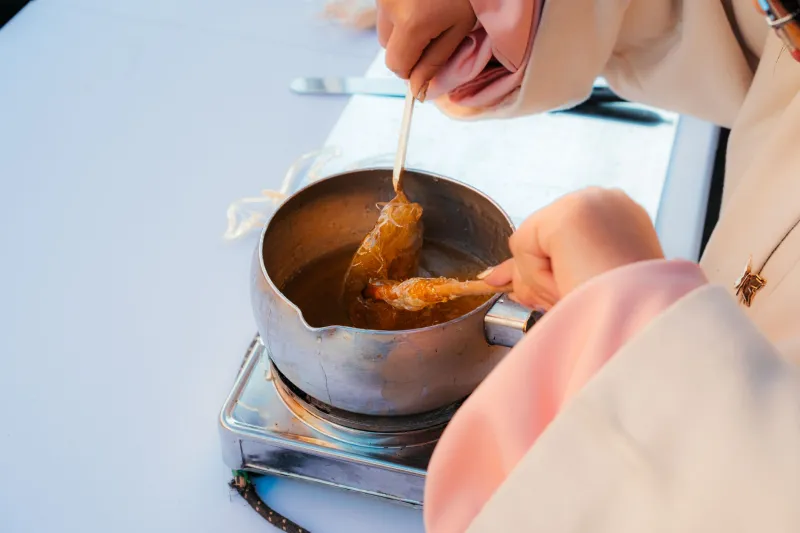
There's a moment, somewhere between the soft-ball and hard-crack stages of boiling sugar, when an experienced confectioner will simply know. Not because a timer has beeped or a digital display has flashed a number — but because the bubbles have changed, the smell has shifted, and the pull of a wooden spoon through the mixture feels different to how it did thirty seconds ago. That moment is everything. Miss it, and you've got toffee when you wanted a humbug. Catch it right, and something close to magic happens.
British confectionery has always been a craft built on this kind of knowledge — the sort that lives in the hands rather than the head, passed down through generations of sweet makers who learned not from textbooks but from standing beside someone who already knew. And while industrial production has largely replaced that intimacy with precision machinery and automated lines, a growing number of confectioners are returning to the old ways — not out of nostalgia, but because they've realised that the textures those methods produce simply can't be replicated any other way.
What Texture Actually Means in a Sweet
It's easy to overlook texture when you're thinking about sweets. Flavour tends to get all the attention — the sharpness of a pear drop, the warmth of ginger in a hard candy, the botanical cool of a proper mint. But texture is doing at least as much work as flavour, possibly more. It determines how quickly a sweet releases its taste, how long it lingers on the palate, and whether eating one feels like a reward or an afterthought.
The snap of a mint humbug — that clean, glassy break between the teeth — signals a very specific sugar structure, one that only forms when the mixture has been cooked to exactly the right temperature and then worked and pulled in a particular way as it cools. The yielding chew of a proper toffee, meanwhile, is the result of entirely different chemistry: lower cooking temperatures, the addition of butter and cream, and a deliberate interruption of the crystallisation process that gives boiled sweets their hardness.
Then there's the middle ground — the almost-chewy, almost-hard quality of a Pontefract cake, or the way a good sherbet lemon yields slightly before it cracks. These textures aren't accidents. They're the product of technique refined over centuries, and they're extraordinarily difficult to achieve without understanding what's actually happening in that copper pan.
The Tools That Made It Possible
For most of British confectionery's history, the toolkit was remarkably simple. A copper pan — preferred because copper conducts heat evenly and responds quickly to changes in flame. A marble slab, cold and unforgiving, onto which the boiled sugar was poured to begin cooling. Wooden spoons for stirring, though experienced makers knew when to stop stirring and when to start. And hands — oiled, calloused, and trained to assess temperature by touch in ways that would make a modern food safety officer wince.
Copper pans weren't a romantic affectation. They were the best tool available, and they remain excellent today. The even heat distribution meant that sugar cooked uniformly rather than scorching at the edges, and the responsiveness of the metal allowed a skilled confectioner to make tiny adjustments to the flame and see the effect almost immediately. Many traditional sweet makers still swear by them, even when everything else in their kitchen has been updated.
The marble slab served a different purpose: it was a working surface that actively helped the confectioner manage the cooling process. Sugar poured onto cold marble begins to set from the outside inward, and the timing of when you begin to fold, pull, or work it determines the final texture. Work it too early and it's unmanageable. Leave it too long and it's already set. The slab doesn't give you instructions — it just gives you a surface, and the rest is judgement.
Pulling, Folding, and the Art of Aeration
One of the most visually striking techniques in traditional British sweet-making is pulling — a process where a mass of cooked sugar is stretched and folded repeatedly, often over a hook fixed to the wall. It looks theatrical, but it's doing something precise: incorporating tiny air bubbles into the sugar structure, which lightens the texture and creates the characteristic sheen you see on pulled sweets like Edinburgh rock or traditional seaside rock.
The amount of pulling — how many times, how vigorously, for how long — changes the final result significantly. Too little and the sweet is dense and glassy. Too much and it becomes opaque and almost chalky. Getting it right requires the kind of feel that only comes from having done it hundreds of times, and it's the sort of skill that genuinely cannot be fully captured in a recipe.
Folding during cooling serves a similar function in toffee-making. Rather than pulling, the confectioner folds the cooling mass back on itself repeatedly, controlling the rate at which it sets and influencing the final grain of the toffee. A toffee that's been well-folded has a different quality to one that's simply been left to set — there's a smoothness to it, an evenness, that you can taste as much as feel.
Why Modern Makers Are Going Back to Basics
For much of the twentieth century, the direction of travel in confectionery was firmly toward industrialisation. Machines could do in minutes what took a craftsperson an hour. Automated temperature control removed the human variable. Consistency became the goal, and consistency was achieved.
But something was lost in the process — and it's taken a while for people to name it. The textures produced by industrial methods tend toward a certain sameness. Hard sweets are uniformly hard. Toffees are uniformly chewy. The interesting in-between states, the slight variations from batch to batch that give a handmade sweet its character, get engineered out.
A new wave of British confectioners — many of them trained in commercial kitchens but drawn to the older craft — are making a deliberate choice to work with copper pans, marble slabs, and their own hands. Some are based in London, operating small-batch operations that supply independent sweet shops and market stalls. Others are reviving regional traditions that had nearly died out, making sweets in the way they were made in specific towns and counties for generations.
What they're finding, almost universally, is that the process changes the product in ways that matter. Sweets made by hand have a liveliness to them — a slight unpredictability that turns out to be a feature rather than a bug. Customers notice it, even if they can't always articulate what's different.
What the Old Methods Teach Us
There's something quietly instructive about the way traditional British confectioners worked. In an era before precise measurement tools, they developed extraordinarily refined sensory awareness — learning to read a boiling pan the way a musician reads a room, adjusting constantly based on what they heard, smelled, and saw.
That kind of attentiveness produces better sweets. It also produces better confectioners — people who understand their craft deeply rather than following a process they've been handed. And it produces something else, too: sweets that carry the mark of the person who made them, in the same way a hand-thrown pot differs from one pressed in a mould.
The next time you crack a humbug between your teeth, or press your thumb into the surface of a proper Devon toffee, it's worth pausing for a second. That texture didn't happen by accident. It happened because someone, somewhere along the line, stood over a copper pan and waited for exactly the right moment — and knew, without being told, when it had arrived.