One Corner, Endless Influence: How Piccadilly Still Decides What Britain Puts in Its Mouth
There's a particular kind of authority that belongs to places rather than people. Savile Row doesn't need to advertise — the name does the work. The same, quietly and persistently, is true of Piccadilly. Ask any serious confectionery buyer, any independent sweet shop owner worth their sherbet, and they'll tell you the same thing: what moves in W1 has a habit of moving everywhere else, usually about six months later.
It sounds like folklore. It probably started as folklore. But spend a little time tracing where Britain's confectionery trends actually originate, and you keep arriving at the same postcode.
The Geography of Taste
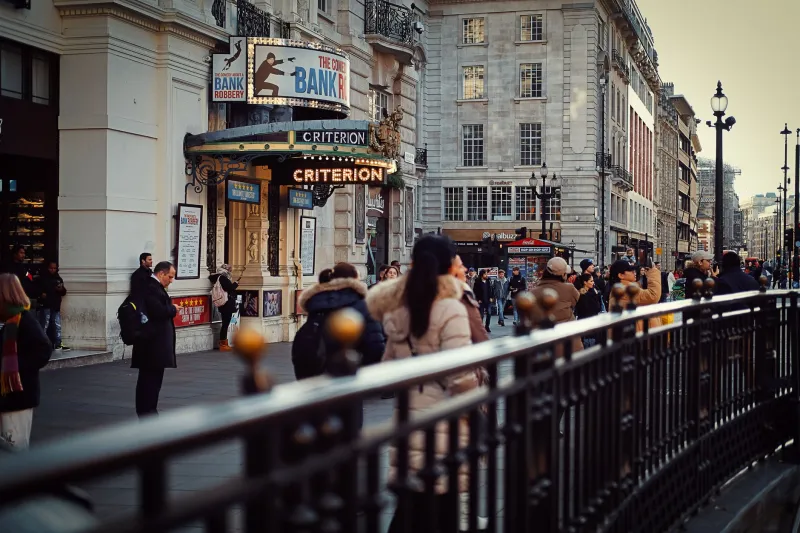
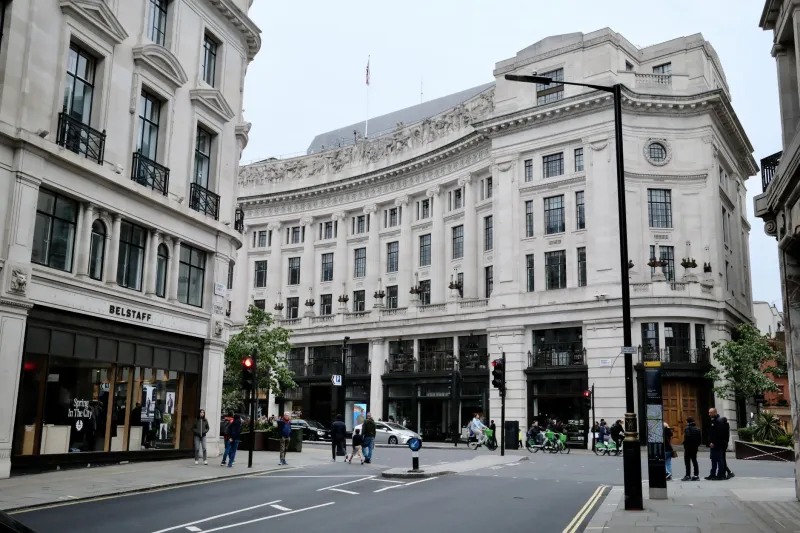
Piccadilly's influence on British sweets isn't accidental. For the better part of two centuries, the area around Piccadilly Circus and the streets radiating out from it — Jermyn Street, St James's, the lower end of Regent Street — functioned as the country's most concentrated showcase of luxury food retail. Fortnum & Mason sits there still, its confectionery counters as immaculate and authoritative as ever. The sweetshops and confectioners that once clustered nearby may have thinned out, but the cultural memory of what Piccadilly represented — quality, occasion, the treat you bought when you wanted something proper — hasn't gone anywhere.
What's changed is the mechanism. The old influence worked through physical proximity: a confectioner opened near Piccadilly, got noticed by the right people, and their products filtered outward through department stores and mail order catalogues. Today, the same effect plays out through a more complicated web of influencers, specialist retailers, and food media — but the geographic anchor point remains stubbornly fixed.
The New Gatekeepers
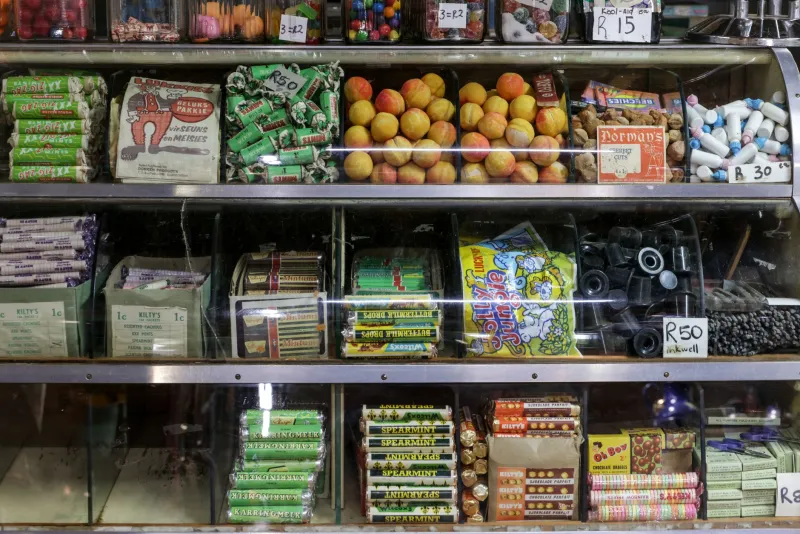
Walk into any of the better independent sweet shops operating in and around Piccadilly today and you'll notice something: they're not just selling sweets. They're curating. Every product on the shelf has been chosen not simply because it tastes good, but because it says something — about craft, about provenance, about the particular kind of Britishness that sells both to nostalgic locals and wide-eyed tourists.
That curation matters far beyond the shop floor. Buyers for regional retailers, gift box companies, and online confectionery businesses regularly make pilgrimages to the West End specifically to see what's being stocked, what's being positioned at eye level, what's being pushed as the premium choice of the moment. The logic is simple: if it's selling in Piccadilly, it'll sell anywhere.
Food writers and stylists compound the effect. A product photographed against the backdrop of a Jermyn Street shopfront carries a different weight to the same product photographed in a warehouse unit in Slough. Location confers legitimacy, and Piccadilly confers it more generously than almost anywhere else in Britain.
Social Media and the Piccadilly Premium
The rise of food content on Instagram and TikTok has, if anything, intensified the area's gravitational pull. A short video of someone unwrapping a beautifully packaged tin of boiled sweets outside a Piccadilly shop front can rack up hundreds of thousands of views. The aesthetic does a lot of the heavy lifting — the Victorian shopfronts, the red buses, the general sense that you're watching someone participate in a tradition rather than simply buying something sugary.
Confectioners who understand this have positioned themselves accordingly. Packaging that photographs well against heritage architecture. Shop interiors designed to read as 'timeless' on a phone screen. Limited edition lines timed to coincide with tourist seasons, when the social media amplification is at its most intense.
But here's the interesting part: the people buying as a result of that content aren't mostly tourists. They're UK consumers, often hundreds of miles from London, who encounter the product online and then seek it out through domestic retailers or direct-to-consumer websites. Piccadilly's reach, once constrained by geography, is now genuinely national — and it operates at speed.
Nostalgia as Currency
Underpinning all of this is something that resists easy quantification: the emotional weight that Piccadilly carries for British consumers. For a certain generation, a trip to London meant a visit to a proper sweet shop in the West End. The memory of that — the smell, the glass jars, the ritual of choosing — has been transferred wholesale onto anything that credibly invokes the same tradition.
This is why 'Piccadilly' as a concept continues to function as a quality signal even for people who've never set foot in the area. It represents a version of British confectionery that is careful, considered, and rooted in something real. Whether the product in question was actually made or sold anywhere near W1 is almost beside the point. The association is doing its work regardless.
Retailers outside London have cottoned on. The language of Piccadilly — heritage, craft, tradition, the suggestion of a London provenance — appears in product descriptions and brand stories across the country. It's become a shorthand for a particular kind of quality promise, one that consumers have been primed over generations to trust.
Supply Chains and the Trickle-Down Sweet
The practical effects show up in purchasing patterns that confectionery buyers find almost predictable. A flavour or format that gains traction in a well-regarded West End shop — say, a revival of a Victorian-era boiled sweet, or a particularly fine salted caramel fudge — will typically appear in upmarket gift shops in cathedral cities within a season, then in independent sweet shops across the country within a year, and eventually in the gift ranges of larger retailers not long after.
It's not a formal system. Nobody's issuing directives from Piccadilly. But the informal authority is real, and the people who move product in this industry are acutely aware of it. The smart money watches what's happening in the West End and places its bets accordingly.
Why It Still Matters
Britain has no shortage of food-obsessed cities. Bristol, Edinburgh, Manchester — all have thriving independent food scenes, all produce genuinely excellent confectionery. But none of them exerts the same gravitational pull on the national market. Part of that is scale, part of it is media concentration, and part of it is simply the accumulated weight of history.
Piccadilly spent the better part of two centuries earning its reputation as the place where British taste was decided. That reputation doesn't evaporate because the economic landscape shifts. If anything, in an era when authenticity and heritage are among the most valuable things a food brand can claim, Piccadilly's historical authority has become more commercially potent, not less.
For those of us who love British sweets — who understand that a proper pear drop or a well-made humbug is a small but genuine pleasure — that's not a bad thing. It means the standards set by generations of West End confectioners continue to exert a pull on what gets made and sold today. It means quality still has a postcode. And it means that one famous corner of London, improbably, stubbornly, continues to have a say in what the rest of the country puts in its mouth.