One Sweet, Twelve Names: My Month Lost in Britain's Regional Naming Wars
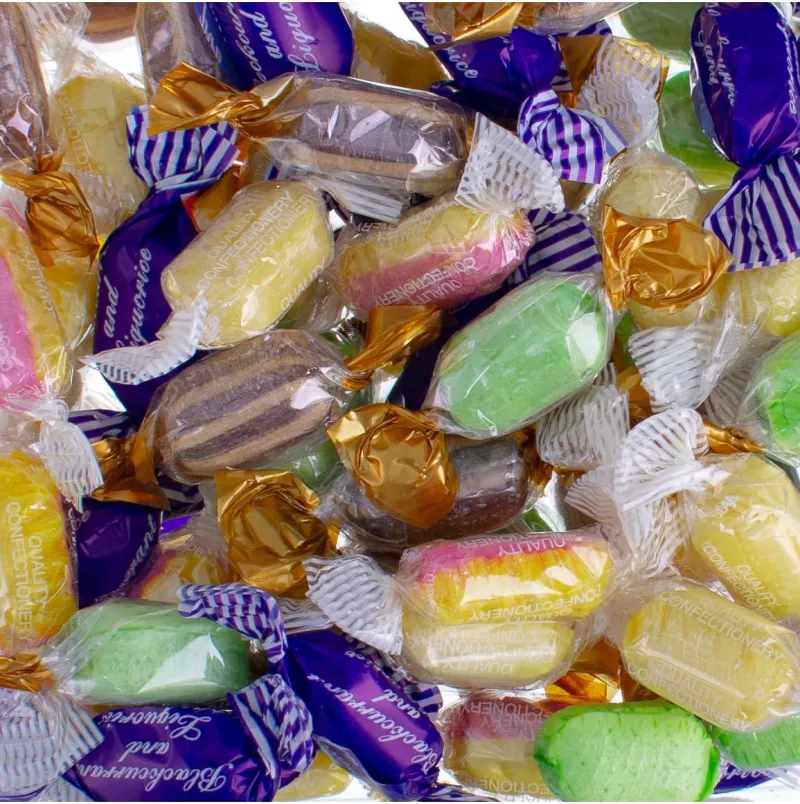
Photo: assorted traditional British boiled sweets in paper bags on table, via m.media-amazon.com
It started innocently enough. A friend from Liverpool mentioned 'Anfield Zeppelins' and I said, confidently, that no such sweet existed. She produced a bag. I ate one. It was, as far as I could tell, a mint humbug wearing a football shirt.
And so began the month: no sweet would pass my lips unless its name changed depending on which side of a county line you stood.
The Rules of the Experiment
The criteria were simple. If a sweet had one name in Leeds and another in Leicester, it qualified. If it was called the same thing from Penzance to Perth, it was banned. My shopping habits became a cartographical exercise, and my kitchen cupboard became a border dispute.
The findings, I'll warn you now, are chaos.
The Humbug Problem
Take the humble humbug. In most of England, that's what it is. But travel north and west and you'll find the same striped mint sweet answering to names that would suggest an entirely different confection. One shop in Yorkshire sold me what I'd ordered as humbugs under a name so local I had to ask twice whether they were joking. They were not joking. The shopkeeper looked at me the way you'd look at someone who'd asked what a 'bap' was.
Then there's the family of fizzy, sherbety things that seem to have a different name in every town with a market square. I counted eleven regional variants of what is essentially the same sour sherbet sweet. Eleven. Some of the names are descriptive. Some are baffling. One, I'm convinced, was invented by a shopkeeper purely to confuse tourists, and fair play to them.
What the Names Are Actually Saying
Here's my theory, developed somewhere around week three: these names aren't really about sweets at all. They're about belonging.
Britain is a country that has always expressed local pride through small things — dialect, food, football, the correct way to make gravy. Sweets are the perfect vehicle for this because everyone has them and nobody takes them too seriously. Calling a sweet by its 'proper' local name is a shibboleth. Say the wrong word in a sweet shop in the wrong town and you've marked yourself as an outsider faster than any accent could.
It's also, I suspect, a quiet act of resistance. The sweets themselves are mass-produced or made to near-identical recipes. The one thing a town can own outright is the name. So it guards it fiercely.
The Verdict
Did the month change how I eat sweets? Not really. A mint humbug tastes the same whatever it's called. But it changed how I shop for them. I now read sweet labels the way other people read wine lists — looking for the tell, the local name, the little marker that says this shop belongs to somewhere.
And I've apologised to my friend from Liverpool. The Zeppelins are real, they're delicious, and I was wrong.
My mum still maintains her version of the naming is the correct one. She's from Doncaster. Apparently that settles it.