Wrappers, Dust, and Devotion: Inside the World of Britain's Most Dedicated Sweet Collectors
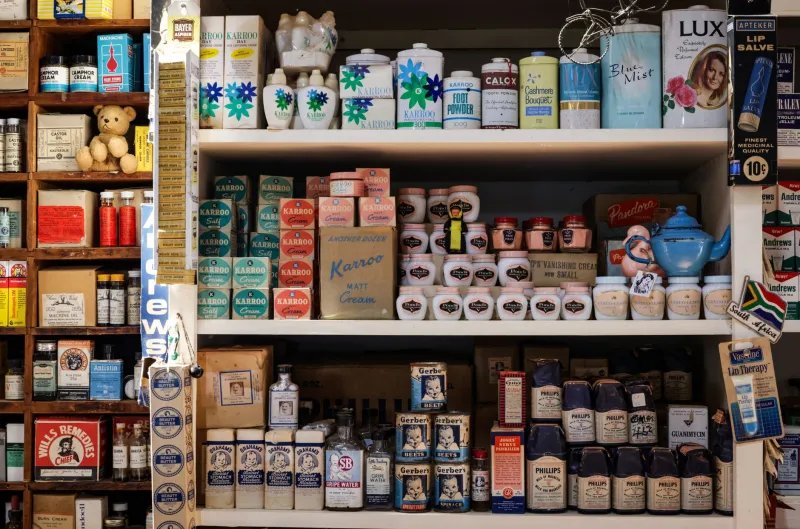
There's a particular kind of silence in Martin Fowler's spare bedroom. Not the silence of emptiness — quite the opposite. Every shelf is packed. Tins from the 1960s sit alongside cellophane-wrapped rolls of long-discontinued pastilles. A framed Rowntree's advertisement from 1974 hangs above a glass cabinet containing what Martin describes, with complete seriousness, as "the crown jewels."
"That's a sealed bag of Spangles," he says, pointing. "Citrus flavour. Still in the original wrapper. 1983, I think, possibly '84." He pauses. "I've been offered a fair bit of money for it. I've never even considered selling."
Martin is 58, a retired engineer from Wolverhampton, and he has been collecting discontinued British sweets for the better part of three decades. He is, by his own admission, "not entirely normal about it." He is also, it turns out, far from alone.
A Growing Community With a Very Specific Obsession
Across Britain, a loose network of collectors has quietly assembled some of the most remarkable private archives of confectionery history you'll never see in a gallery. They trade tips in online forums, swap duplicates through the post, and occasionally travel significant distances to inspect a find that someone's unearthed in a deceased relative's attic.
The objects themselves range from the perfectly preserved to the frankly perilous. Sealed tins of Quality Street from the 1970s. Unopened tubes of Treets — the peanut-chocolate predecessor to Minstrels that disappeared in 1989. Boxes of Aztec bars. The occasional Texan bar, still in its wrapper, though collectors are cautious about those because the chocolate has a habit of blooming into something that resembles grey chalk.
What unites these collectors isn't just a fondness for old sweets. It's something harder to name — a compulsion to hold onto flavour as a form of memory, even when the flavour itself is long gone.
"I'll never eat the Spangles," Martin says. "That's not the point. The point is that they existed. And now I can prove it."
The Detective Work Behind the Hunt
Tracking down a specific discontinued sweet is not a simple business. It requires patience, a tolerance for dead ends, and an almost forensic approach to provenance.
Susan Brightwell, a 44-year-old archivist from Bristol who collects primarily packaging rather than the sweets themselves, describes her methodology in terms that would sound familiar to any serious antiques dealer. "You start with what you know — the brand, the approximate era, the flavour variant if there was one. Then you work outwards. Old catalogues, trade magazines, confectionery industry journals. There are a few key archives that are genuinely invaluable."
She pulls out a binder of photocopied trade listings from the early 1980s. "This tells me what was being distributed and when. Cross-reference that with regional stockist records and you can sometimes narrow down where a particular run of sweets might have ended up."
Social media has transformed the hunt. Facebook groups dedicated to nostalgic British sweets have tens of thousands of members, and it's not unusual for a collector to post a query on a Tuesday and receive a credible lead by Friday. Car boot sales remain productive, particularly in areas where older residents are clearing out long-untouched storage. Estate sales, charity shops, and the occasional call to a retired confectionery sales rep have all yielded results.
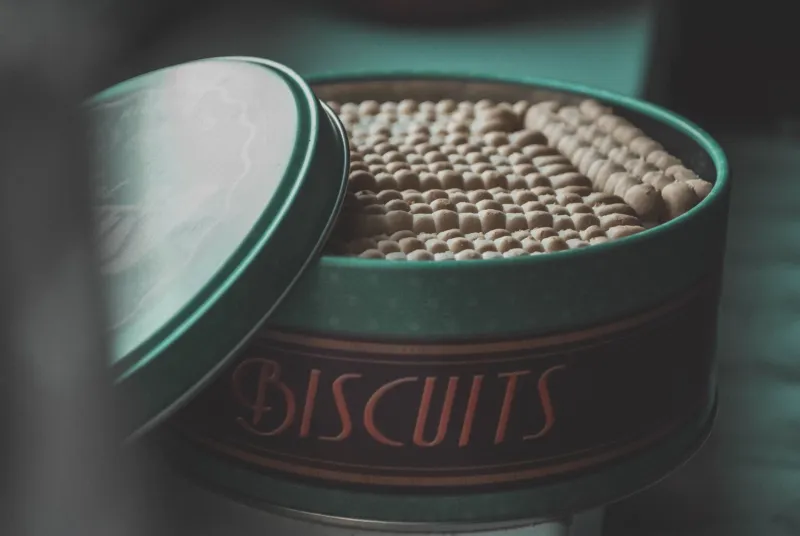
"The best find I ever made," says Susan, "came from a woman in Derbyshire who'd been keeping a box of Toffo singles in a biscuit tin since roughly 1991. She'd completely forgotten they were there. She thought I was completely mad when I offered to buy them off her. I probably am."
What Collecting Reveals About British Nostalgia
It would be easy to dismiss all of this as harmless eccentricity — grown adults getting misty-eyed over glucose and artificial flavouring. But there's something genuinely interesting going on beneath the surface.
Dr. Rachel Okafor, a cultural historian at the University of Sheffield who has written about material nostalgia in post-war Britain, argues that confectionery collections occupy a unique psychological space. "Sweets are one of the most democratically shared experiences in British culture," she explains. "They cross class lines in a way that, say, a particular brand of biscuit or a specific cut of meat might not. Almost everyone had access to the penny tray. Almost everyone remembers their particular favourites."
When those favourites disappear — discontinued by manufacturers chasing margins, or swallowed up in mergers and rebranding exercises — something specific is lost. Not just a product, but a sensory anchor to a particular time and place.
"What collectors are doing, at some level, is refusing to let that anchor go," says Dr. Okafor. "They're asserting that these things mattered. That they still matter."
Martin puts it more simply. "My mum used to buy me Spangles on a Friday after school. She died in 2009. When I look at that bag, I'm not really looking at a bag of sweets, am I?"
The Ethics and Oddities of the Trade
Not everyone in the collector community is sentimental about it. Some approach the hobby with the cool detachment of a philatelist assessing a stamp — condition, rarity, and provenance matter above all else. Sealed is always preferable to open. Original point-of-sale displays command serious interest. Anything with a legible price sticker from a specific retailer is considered especially desirable.
There are ethical questions, too, that the community occasionally grapples with. When does collecting tip into hoarding? Is there something slightly troubling about accumulating objects that were designed to be consumed? And what happens to a collection when its owner is gone?
Susan has already made arrangements. Her packaging archive is documented, catalogued, and earmarked for a confectionery museum project she's been quietly supporting for several years. "I don't want it to disappear into a skip," she says. "That would rather defeat the purpose."
Martin is vaguer on the subject. He mentions a nephew who shares his interest, though with noticeably less fervour. "He'd probably eat the Spangles," he says, with the tone of a man contemplating a genuine tragedy.
More Than a Sweet Tooth
What strikes you, spending time with collectors like Martin and Susan, is how seriously they take the responsibility of what they've assembled. These aren't hoarders in denial. They're custodians of something that mainstream cultural institutions have largely ignored — the flavour history of ordinary British life.
The big confectionery brands have their own archives, of course. Some manufacturers maintain collections of vintage packaging and product samples. But the private collector fills a different role. They document the regional variants, the short-lived promotional editions, the flavours that were quietly dropped without announcement and never mourned publicly.
In a country that has always been quietly brilliant at preserving the things that matter to it — from village fetes to brass bands to the specific rhythm of a seaside rock shop — the sweet collector fits a very recognisable tradition. They are, in their own peculiar way, doing exactly what Britain has always done.
Holding on. Just in case.