Leaving the Office Behind: How a New Generation Is Falling Head Over Heels for the Sweet Maker's Trade
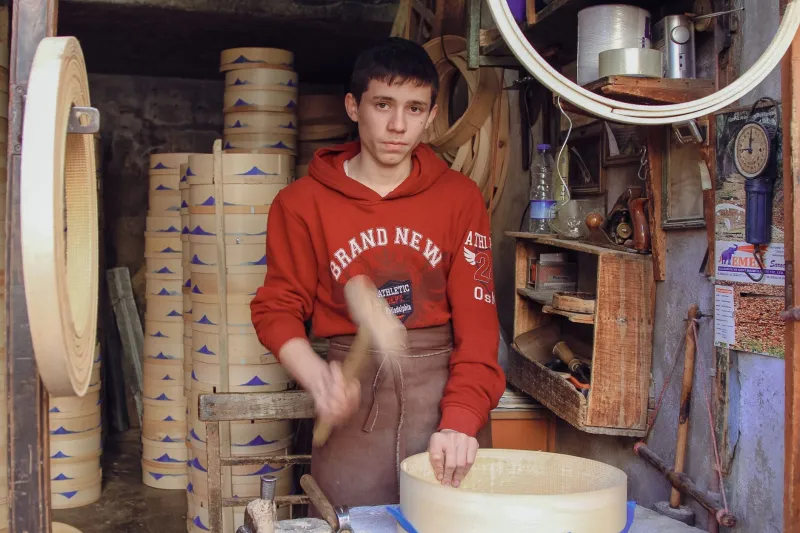
There's a particular kind of satisfaction, Tom Ashworth tells us, in pulling a batch of Edinburgh rock from the cooling slab and knowing it's exactly right. The texture, the give, the faint powdery bloom on the surface. "You can't fake that," he says, wiping his hands on his apron. "Either you've got it or you haven't." Tom is 24. Eighteen months ago he was halfway through a business management degree in Sheffield. Now he's an apprentice confectioner in a small workshop in Harrogate, and he has absolutely no regrets.
He's not alone. Quietly, almost without anyone noticing, something is shifting in the way young people in Britain think about work — and about sweets.
The Numbers Tell a Story
It's hard to pin down precise figures, because traditional confectionery sits in an awkward gap between artisan food production and manufacturing. But speak to anyone running an independent sweet shop or small-batch confectionery business and they'll tell you the same thing: the enquiries from young people wanting to learn the trade have increased noticeably over the last three or four years.
The Craft Confectionery Network, an informal grouping of independent makers, says its membership has grown by around a third since 2021, and a meaningful slice of that growth comes from under-thirties setting up their first businesses. Some are formally trained. Others are self-taught, armed with YouTube videos, vintage recipe books, and an almost obsessive willingness to fail repeatedly until they get it right.
What's drawing them in? The answers are more varied than you might expect.
More Than Nostalgia
It would be easy to dismiss this as a nostalgia trend — young people retreating into a comforting past in uncertain times. And yes, there's an element of that. The resurgence of interest in traditional British sweets has been well documented, and anyone who's watched a jar of pear drops sell out at a market stall will know that appetite for the old favourites is real.
But spend time with the people actually doing this work and you quickly realise the motivation runs deeper. Many talk about wanting something tangible. A career they can hold in their hands. "I spent a year in marketing," says Priya Mehta, who opened a small confectionery workshop in Bristol two years ago at the age of 27. "Every day I made things that didn't exist. Decks, strategies, content. I wanted to make something real."
For Priya, that something real turned out to be fudge. Specifically, a clotted cream fudge made to a recipe she found in a 1960s Women's Institute handbook, adapted slightly to account for modern dairy sourcing. She now supplies three independent delis and runs workshops for the public on weekends. She hasn't looked back.
The Craft Itself Is the Point
What strikes you when you visit a traditional confectionery workshop is how genuinely skilled the work is. This isn't a case of following a simple recipe. Temperature control, timing, the physical manipulation of hot sugar — these are things that take months to learn properly and years to master. Pulling boiled sweets, spinning toffee, achieving the right grain on a tablet: each is its own discipline.
Jamie Oldfield, who has been making sweets in his family's Cumbrian workshop for over thirty years, has taken on two young apprentices in the last couple of years. "The ones who stick," he says, "are the ones who get hooked by the difficulty of it. They want to be tested. They want something that pushes back."
There's a growing sense, particularly among younger workers who came of age during the pandemic, that many modern careers offer very little of that friction. The process of genuine skill acquisition — slow, often frustrating, deeply satisfying when it clicks — is something they actively seek out.
Old Craft, Modern Business
Here's where it gets interesting. The new generation of confectioners aren't simply recreating the past. They're combining heritage techniques with a thoroughly modern understanding of how to run a small business, build a brand, and reach customers directly.
Social media has been transformative. A short video of someone pulling a batch of traditional humbugs — the colours stretching and twisting, the steam rising, the satisfying clunk of the finished sweets hitting the tray — can rack up hundreds of thousands of views. That visibility translates into online sales, workshop bookings, and wholesale enquiries that previous generations of small sweet makers could only dream of.
Priya's Bristol workshop has over 18,000 Instagram followers. Tom's Harrogate employer has started selling online partly on the strength of content Tom himself creates between batches. Neither of them sees any contradiction between the traditional craft and the modern platform. "The sweets are old," Tom says. "The way you tell people about them doesn't have to be."
What the Established Makers Think
The veterans are, on balance, delighted. There's a genuine worry in the traditional confectionery world about succession — about what happens when the people who carry these techniques in their hands eventually retire. The arrival of enthusiastic, capable young people is welcome news.
Jamie is characteristically blunt about it: "If nobody learns this, it dies. Simple as that. And I'd rather it didn't die."
There are occasional grumbles about shortcuts — the temptation to use compound chocolate instead of real couverture, or to buy in pre-made fondant rather than learn to make it. But most established makers seem genuinely impressed by the commitment they're seeing from the best of the new arrivals.
A Sweet Future
For Britain's confectionery heritage, this matters enormously. The techniques being preserved in these small workshops — the ones Tom is learning in Harrogate, that Priya is refining in Bristol, that dozens of others are picking up in kitchens and workshops across the country — are the same ones that gave us the sweets we grew up with. The ones we still reach for when we want comfort, or celebration, or just the pleasure of something made properly.
The corporate world will always have its appeal. The salary, the structure, the clear progression. But for a growing number of young Britons, none of that is quite as appealing as a warm workshop, a copper pan, and the slow, hard, deeply rewarding business of learning to make something genuinely good.
Tom puts it simply: "I make things people love. How many people can say that about their job?"
Not enough, Tom. Not enough.