Shipped Across Continents for a Bag of Rhubarb and Custards: The Global Underground Trade in British Sweets
Somewhere in Melbourne, a British expat is opening a battered cardboard box with the kind of reverence usually reserved for birthday presents or fine wine deliveries. Inside, wrapped in tissue paper and surrounded by bubble wrap as though they might shatter, are three bags of Pontefract cakes, a tin of Mackintosh's toffees, and a handful of individually wrapped humbugs sourced from a proper old-fashioned sweet shop somewhere near Leeds. She paid nearly four times the retail price for the privilege. She has no regrets whatsoever.
This scene — slightly absurd, deeply human — plays out thousands of times a week across the globe. British sweets have become, for a very particular kind of person, a serious obsession. And where obsession goes, a market always follows.
Why Distance Makes the Sweet Tooth Grow Fonder
There's a well-documented psychological phenomenon at work here, and it goes beyond simple homesickness. Taste and smell are processed in the brain's limbic system — the same region that handles memory and emotion — which is why a single sherbet lemon can collapse twenty years of distance in about half a second. For British expats living in countries where the confectionery aisle is dominated by Hershey bars and locally produced gummies, the absence of familiar sweets becomes, over time, genuinely distressing in a low-level, persistent sort of way.
Dr. Rachel Simms, a food psychologist based in Edinburgh, has written about what she calls "flavour anchoring" — the way certain tastes become inseparably linked to identity, safety, and belonging. "When people emigrate, they often find that food is the last cultural connection to loosen," she explains. "You can adapt to a new climate, a new job, a new social circle. But the taste of a specific sweet from childhood? That's almost impossible to replicate or replace."
This explains why the demand isn't limited to recent expats. Some of the most passionate buyers in the informal British sweets trade have been living abroad for a decade or more. The craving, if anything, intensifies.
The Resale Economy Nobody Talks About
Type the right combination of words into eBay, Etsy, or any number of Facebook groups dedicated to British expat life, and you'll find a thriving secondary market that operates in plain sight. Tins of Quality Street that retail for a few quid in any British supermarket change hands for fifteen, twenty, sometimes thirty pounds once you factor in international shipping, handling fees, and the seller's not-inconsiderable markup. Specialist "British food" shops in Canada, Australia, New Zealand, and the United States — often run by expats themselves — charge similarly elevated prices, and still struggle to keep stock on the shelves.
Then there are the more informal arrangements. WhatsApp groups and Reddit communities dedicated to British expat life regularly feature requests along the lines of "anyone travelling from the UK in the next month willing to pack a few extras?" This is the confectionery equivalent of the duty-free favour, scaled up and systematised. Some people have built genuine side incomes around it: sourcing from traditional sweet shops, packaging carefully, and posting internationally with a margin that would make any small business owner raise an eyebrow.
One seller — who asked not to be named, though she operates openly on Etsy from a village in North Yorkshire — told us she ships to fourteen countries regularly. Her bestsellers are exactly what you'd expect: Parma Violets, Cola Cubes, Black Jacks, Liquorice Allsorts, and anything that comes in a vintage-style tin. "People aren't just buying sweets," she said. "They're buying a feeling. The tin is almost as important as what's inside it."
Scarcity, Authenticity, and the Luxury Paradox
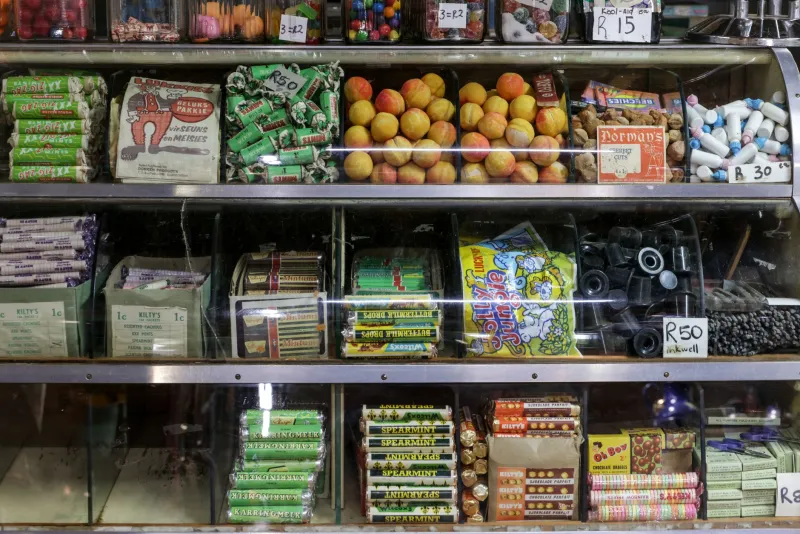
What's fascinating about this market is the way it has transformed the perceived value of products that most people in Britain walk past without a second glance. A bag of pear drops from a pick 'n' mix counter costs pennies. Shipped to a British expat in Toronto, packaged in a branded box with a handwritten note, it becomes a small luxury item — something to be savoured slowly, shared with a nostalgic story attached.
This is the luxury paradox of traditional British confectionery: its value has almost nothing to do with its ingredients and everything to do with what it represents. Authenticity, heritage, and the irreplaceable specificity of a particular flavour made in a particular way. You can find sweets in Australia. You cannot find these sweets.
The major confectionery brands have noticed, of course. Several have made concerted efforts to expand international distribution, and specialist British food subscription boxes — some with five or six-figure subscriber numbers — have professionalised what was once a purely grassroots trade. But the informal market endures, partly because it moves faster and partly because there's something about a parcel sent by an actual person, sourced from an actual sweet shop, that a corporate subscription service simply can't replicate.
What the Sellers Know That the Brands Don't
The most successful independent sellers in this space understand something that larger operations often miss: people aren't buying a product, they're buying a story. The best listings don't just describe the sweets — they describe the shop they came from. The cobbled street. The glass jars behind the counter. The owner who's been making the same fudge recipe since 1987.
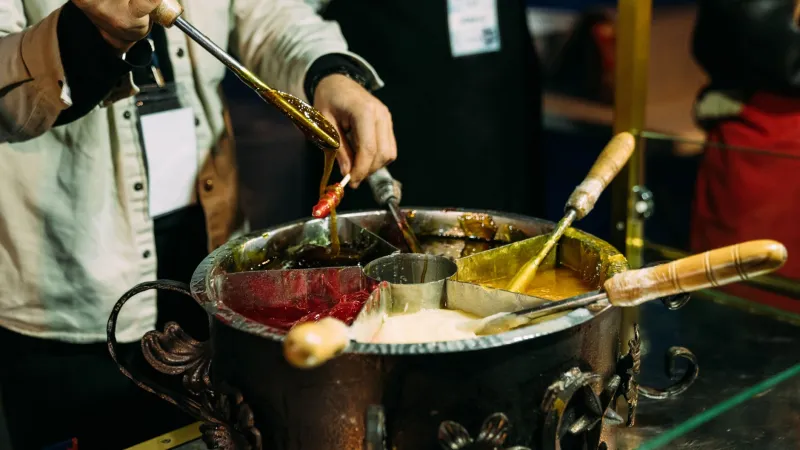
This is where traditional British confectionery — the kind made by hand in small batches, the kind that still uses copper pans and proper sugar thermometers — has a genuine edge. Its story is real, and it's specific, and it resonates with anyone who grew up in a country where the corner sweet shop was a genuine institution.
At Piccadilly Sweets, we hear from overseas customers regularly — people who've found us through a recommendation in an expat forum, or been sent a box by a relative, or simply stumbled across the site in a moment of particularly acute homesickness. They write to us with the kind of warmth you'd usually associate with hearing from an old friend. They ask after specific sweets by name. They want to know if we can ship to New Zealand, to South Africa, to rural France.
The answer, increasingly, is yes.
A Sweet Worth Crossing Oceans For
There's something quietly remarkable about the fact that a boiled sweet — a product that has barely changed in a century, made from sugar and flavouring and not much else — can carry enough emotional freight to sustain a global trade. It says something about the peculiar power of British confectionery, and about the enduring human need to hold onto the things that made us who we are.
The expat in Melbourne will finish her humbugs slowly, rationing them across a fortnight. When the last one is gone, she'll probably start composing her next order. The box will arrive battered but intact. She'll open it like a birthday present.
Some things are worth every penny of the markup.