How One London Street Convinced the World It Invented British Sweets
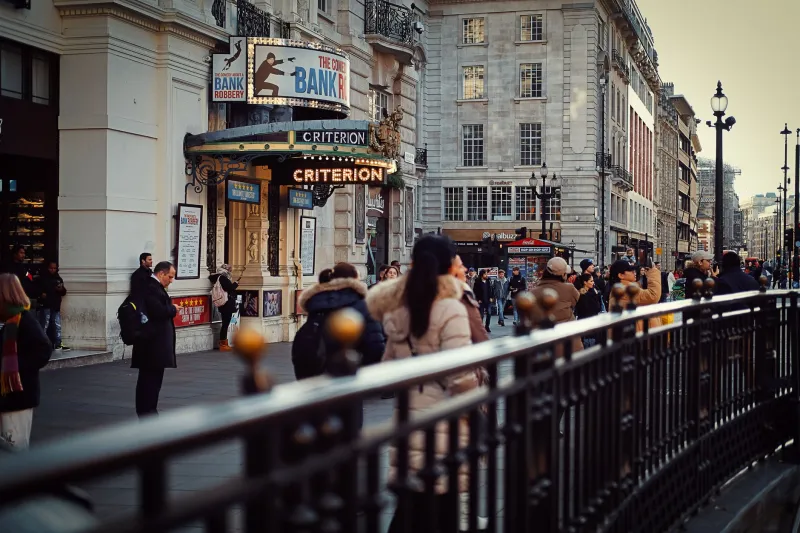
There's a moment that happens to a certain kind of tourist. They've just stepped off a bus on Regent Street, they're blinking at the neon glow of Piccadilly Circus, and somewhere in their luggage plan — between the Tower of London and a cream tea in Covent Garden — is a stop at a sweet shop. Not just any sweet shop. The sweet shop. The one that, in their imagination, sells every boiled humbug, sherbet lemon, and chocolate lime that Britain has ever produced, all in a single glorious room that smells faintly of pear drops and nostalgia.
The funny thing is, they're not entirely wrong to feel that way. Piccadilly really did earn its place in the confectionery story. It just earned it in ways most people — including plenty of Brits — don't fully appreciate.
A Street That Sold More Than Sweets
Long before the Circus became a magnet for selfie sticks and Eros photos, the wider Piccadilly area was one of the most commercially prestigious addresses in London. From the late 18th century onwards, the street attracted luxury traders of every stripe — hatters, tailors, wine merchants, and yes, confectioners. These weren't your penny-tray corner shops. They were establishments with polished mahogany counters, glass-fronted cabinets, and the kind of hushed reverence usually reserved for jewellers.
Fortnum & Mason, just a short walk away on Piccadilly itself, was selling elaborate sugar confections and crystallised fruits to the gentry as far back as the 1700s. The area became associated not just with sweets, but with quality sweets — the sort you bought as a gift, wrapped in tissue, presented in a tin that you'd keep long after the contents were gone. This wasn't pick 'n' mix territory. This was confectionery as cultural currency.
That reputation for refinement is, in large part, why the name stuck. When British sweets began travelling abroad — first through empire, then through tourism, eventually through the internet — the Piccadilly postcode carried a weight that somewhere like, say, a market stall in Wolverhampton simply couldn't match. Geography became branding before anyone had invented the word.
The Tourist Pipeline and What It Built
By the mid-20th century, something interesting was happening. As international tourism to London grew, Piccadilly Circus became one of the city's great funnelling points — a place almost every visitor passed through at some stage. And where tourists go, shops follow. Sweet shops, in particular, discovered that the passing trade was enormous, and that foreign visitors had a specific appetite: they wanted British sweets, the ones they'd heard about, the ones that felt authentically old-fashioned and delightfully different from what they had at home.
This created a curious feedback loop. The shops stocked what tourists expected. Tourists bought what the shops stocked. And slowly, the Piccadilly sweet shop became a self-fulfilling myth — a place that existed partly to confirm what visitors already believed about Britain. Jars of rhubarb and custard. Bags of cola bottles. Rows of fudge wrapped in cellophane. The aesthetic of a traditional British confectioner, curated and presented for an international gaze.
Is that a bad thing? Not necessarily. It kept certain sweets alive that might otherwise have faded. It gave smaller British producers a reliable outlet. And it meant that when someone from Japan or Australia or Texas came looking for a slice of British culture they could actually eat, there was somewhere to send them.
What 'Piccadilly' Actually Means Now
Here's where it gets genuinely interesting. The word 'Piccadilly' — as a cultural signifier rather than a postcode — has taken on a life of its own in the confectionery world. You'll find it used by shops from Edinburgh to Sydney as a shorthand for a particular kind of British sweet experience: traditional, slightly old-world, premium without being pretentious. The name evokes gas lamps and quarter-pound bags and the particular satisfaction of a well-made boiled sweet that takes three minutes to dissolve.
That's an enormous amount of meaning to pack into eight letters and a y. And it's meaning that was constructed, piece by piece, over a couple of centuries of commercial activity in and around one London street.
For us at Piccadilly Sweets, that's not just history — it's the whole point. The name isn't chosen arbitrarily. It's a deliberate nod to the tradition of quality confectionery that the area came to represent: sweets made with care, sold with honesty, and rooted in recipes that have earned their place on the shelf.
The Gap Between Legend and Reality
It would be dishonest, though, not to acknowledge that the Piccadilly myth sometimes runs ahead of the reality. Not every sweet shop in the area today is a temple of traditional craft. Some are closer to tourist traps, selling overpriced bags of sweets that you could find cheaper in a supermarket two streets away. The legend creates demand, and demand doesn't always bring out the best in retail.
There's also the question of whether 'British sweets' as understood abroad actually reflects what most British people eat day to day. The international image — all humbugs and pear drops and clotted cream fudge — skews heavily towards the nostalgic and the artisanal. The reality includes Haribo, Cadbury Roses, and whatever's on offer at the cinema pick 'n' mix. Both things are British. Only one of them gets to be 'Piccadilly'.
That gap is worth sitting with, because it tells you something important about how cultural identity gets constructed around food. We tend to export our most romantic version of ourselves. The Piccadilly confectionery story is, in that sense, a particularly sweet example of national myth-making — literally and figuratively.
Why the Story Still Matters
None of which is to say the legend is hollow. Quite the opposite. The fact that a single London street could become globally synonymous with a specific type of food culture speaks to something real about the quality and distinctiveness of British confectionery at its best. The humbugs and the barley sugars and the proper toffees — they're not just tourist bait. They're genuinely good, genuinely different, and genuinely worth seeking out.
The Piccadilly story matters because it reminds us that where sweets come from — geographically, historically, culturally — is part of what makes them taste the way they do. A peppermint cream made in a small batch with real cream and proper peppermint oil carries a story with it. That story has a setting. And for British confectionery, that setting has, for better or worse, always had a bit of Piccadilly in it.
We reckon that's something worth being proud of — as long as we keep making sure the sweets themselves live up to the name.