The Detectives of the Boiling Pan: How a New Wave of Confectioners Is Raiding the Archives for Lost Victorian Flavours
A Recipe Written in a Dead Language
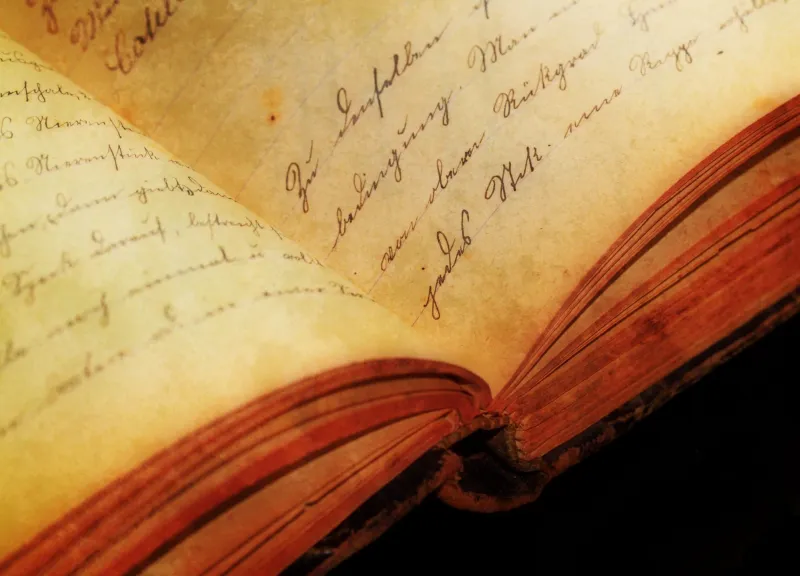
The notebook is water-damaged along one edge and the handwriting switches between two different hands partway through, suggesting it passed between confectioners at some point in the 1880s. The measurements are given in drachms and scruples. Several of the ingredients listed haven't been commercially available for over a century. One entry refers to a flavouring simply as "the essence from Aldgate" with no further elaboration, as though the reader would obviously know.
This is the kind of source material that Marcus Featherstone, a confectioner based in Shropshire, has been working with for the past three years. He found the notebook through a contact at a regional archive, and it's become the cornerstone of a project that has taken him into museum collections, food history libraries, and correspondence with academics who specialise in Victorian domestic economy. The goal: to recreate sweets that haven't existed in any form since before the First World War.
"It's not like following a normal recipe," he says, setting down a batch of what he believes is a close reconstruction of a Victorian violet cream. "Half the time you're translating. The other half you're making educated guesses and hoping your instincts are sound."
Why Now? The Archive Rush
Featherstone isn't alone. Across Britain, a small but growing number of confectioners have started treating historical archives as a kind of larder — a place where forgotten flavours wait to be recovered and returned to the world. The trend has been building quietly for several years, driven partly by the broader revival of interest in food heritage and partly by a generation of makers who came to confectionery through a love of history rather than through a family trade.
The archives themselves vary wildly in what they hold. The British Library has digitised portions of Victorian household management texts that include confectionery sections. Regional museums occasionally hold the records of defunct sweet manufacturers — order books, formulation notes, correspondence with ingredient suppliers. Some of the most useful material turns up in unexpected places: the personal papers of Victorian housewives, the inventories of pharmacists who also sold confections, the recipe columns of long-defunct periodicals.
Hannah Bright, a food historian at the University of Leeds who has consulted with several confectioners undertaking this kind of work, describes the research as genuinely exciting but also genuinely difficult. "Victorian confectionery writing assumes a level of knowledge that simply doesn't exist anymore," she explains. "The writers weren't producing instruction manuals — they were writing for people who already understood the basics. Filling in the gaps requires a combination of historical knowledge, practical confectionery skill, and a willingness to be wrong repeatedly."
The Ingredient Problem
If the interpretive challenges are significant, the ingredient challenges are sometimes insurmountable. Victorian confectionery used a range of materials that are either no longer produced, no longer legal for use in food, or so obscure that sourcing them requires considerable effort and expense.
Orris root, once common as a flavouring agent, is still available from specialist suppliers but isn't something you can pick up easily. Certain natural dyes that gave Victorian sweets their characteristic colours have been superseded by modern alternatives that produce a visually similar but chemically distinct result. Some flavouring compounds were derived from plants that are no longer cultivated commercially in Britain, requiring either costly imports or the kind of lateral thinking that leads a confectioner to spend an afternoon in a botanical garden with a notebook.
And then there are the ingredients that simply cannot be used. Lead-based food colourants, which were depressingly common in Victorian sweets, are obviously not going back into production. Several compounds used for flavouring in the nineteenth century have since been identified as harmful at anything beyond trace quantities. The authentic reconstruction, in these cases, has to become a considered approximation — capturing the spirit and the flavour profile while working within constraints that the original makers never faced.
"You end up making a philosophical decision," says Featherstone. "Are you trying to recreate exactly what someone in 1887 would have tasted? That's probably impossible and arguably not desirable. Or are you trying to capture the essence of that flavour using the best available modern equivalents? That's achievable, but it means accepting that what you're making is an interpretation."
What Consumers Actually Want
The question of authenticity versus approximation turns out to be one that consumers have fairly strong feelings about — though not always the feelings that makers expect.
When Featherstone launched a small range of Victorian-inspired sweets at a market in Shrewsbury last autumn, the response surprised him. The most common question wasn't "is this exactly how they would have tasted?" but rather "what's the story behind it?" People were drawn to the narrative as much as the flavour — the idea that they were eating something recovered from history, that a piece of detective work had gone into what was in their hand.
Bright has observed the same thing in her research. "There's an appetite for food that has a story attached to it," she says. "The historical accuracy matters, but it matters as evidence of effort and care rather than as a pure technical standard. Consumers aren't going to taste a Victorian violet cream and know whether the violet flavouring is exactly period-correct. What they're responding to is the seriousness of the attempt."
This doesn't mean corners can be cut. The makers doing this work well are doing it with genuine rigour — consulting multiple sources, testing iterations, being honest in their labelling about what they've reconstructed and what they've approximated. The ones who slap a Victorian-style font on a standard product and call it heritage are, by most accounts, missing the point entirely and usually found out fairly quickly by anyone who's paying attention.
Flavours That Deserve to Come Back
For all the complexity of the process, the results can be genuinely revelatory. Featherstone's violet cream — floral, slightly powdery, with a sweetness that's less aggressive than most modern confectionery — tastes like nothing currently on the British market. That's partly the point.
Other makers working in this space have recovered rose and bergamot combinations, liquorice preparations using traditional Pontefract methods that predate the standardised modern product, and barley sugar recipes that use actual barley water rather than the synthetic flavour compound that replaced it decades ago.
Each recovery is, in its own small way, an act of preservation. A flavour that existed once, that people enjoyed, that fell out of production for reasons of economics or fashion rather than any failure of quality — brought back by someone patient enough to go looking for it.
The archives, it turns out, are full of them. The confectioners willing to do the work are, slowly, bringing them home.